

This guide maps the full landscape of drone misuse risks, well beyond the “drone attack” scenario most people picture first. It covers six distinct categories: privacy and espionage, smuggling and criminal use, aviation and public safety, ethical questions in modern warfare, environmental impact, and cybersecurity, with real documented incidents illustrating each, and explains why these risks are more connected than they first appear.
Drone misuse spans six distinct risk categories: privacy and espionage, smuggling and criminal use, aviation and public safety threats, ethical and legal questions in warfare, environmental disruption, and cybersecurity. Because modern drones are functionally flying computers, they carry network-intrusion risks alongside the physical ones, meaning a complete defense has to address all six rather than treating each in isolation.
Key takeaways
- Drone misuse spans six distinct risk categories: privacy and espionage, smuggling and criminal use, aviation and public safety, ethical and legal questions in warfare, environmental impact, and cybersecurity.
- India’s drone market is projected to grow substantially by 2030 (estimates range from roughly $1.39 billion to $4.87 billion depending on the research firm), which means both legitimate use and misuse risk are set to scale together.
- Real, documented incidents already illustrate several of these categories: contraband smuggling across the India-Pakistan border, near-miss incidents with commercial aircraft, and drones used in documented attacks on public officials.
- Modern drones are, functionally, flying computers, which means they carry the same hacking and network-intrusion risks as any other connected device, not just the physical risks people usually think of first.
Table of Contents
The Sky Isn’t Falling, It’s Watching
Drones have evolved from sci-fi gadgets to everyday tools – filming weddings, delivering groceries, monitoring agriculture. But the same machines that help us can also harm us. India and the world are witnessing rising drone misuse. From Bengaluru airport shutdowns to suspected espionage near U.S. military bases, the threat is now directly overhead.
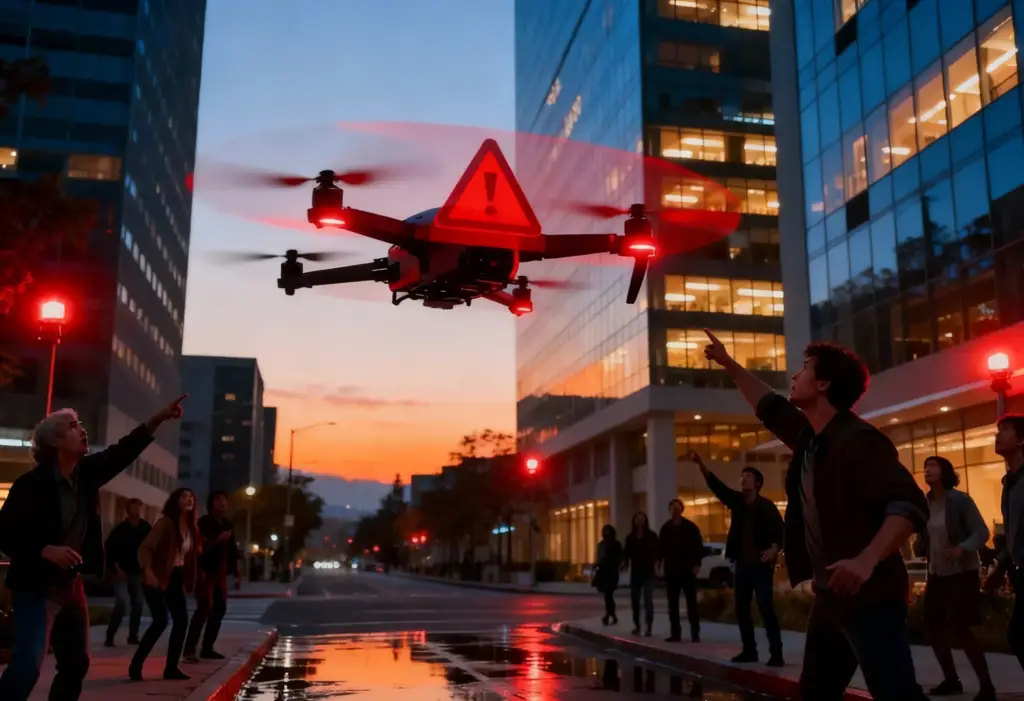
At the same time, the defense sector is advancing quickly in this space. Aero India 2025 showcased indigenous drone technologies reflecting India’s strategic ambition in autonomous aerial systems. As India’s drone market grows substantially through 2030, the country has to confront both the promise of drones and their real, documented peril at the same time.
For the technical foundation behind counter-drone systems, see: A Guide to Counter-Unmanned Aerial Systems (C-UAS): Everything You Need to Know
From Innovation to Intrusion
Espionage in the air
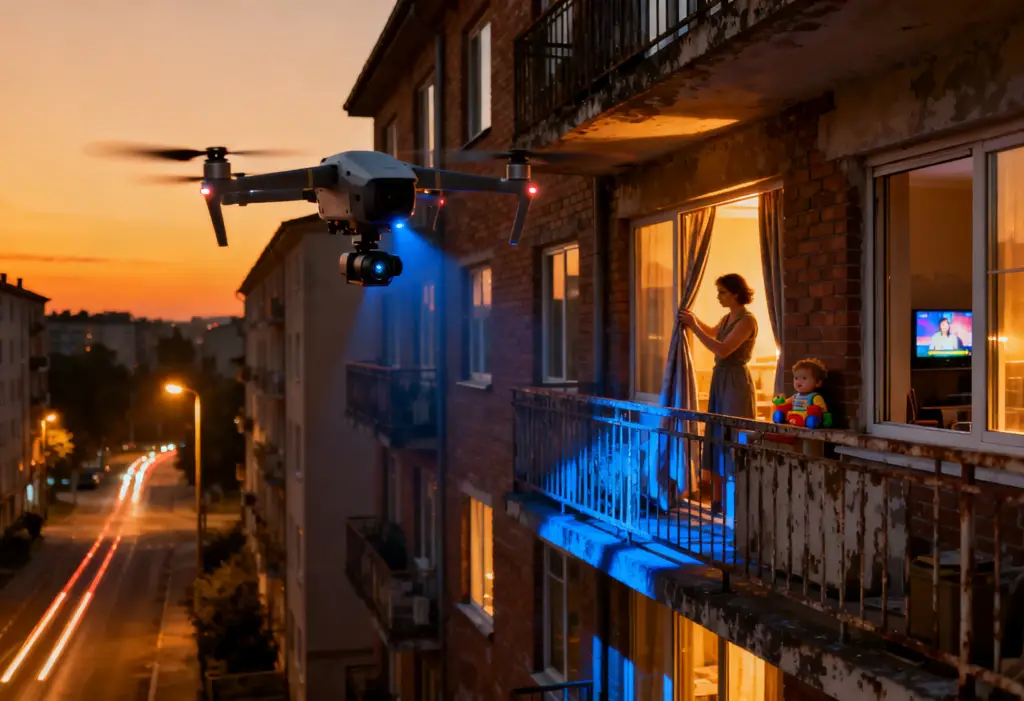
Armed with high-resolution cameras and advanced tracking capabilities, drones can easily become tools for unwarranted surveillance. From capturing unauthorised footage in sensitive areas such as military installations and government buildings, to monitoring individuals without consent, their misuse puts personal privacy at serious risk.In India, numerous residents have raised concerns about drones flying near apartment complexes and private properties, often with no clear accountability. With regulatory gaps still in place, such incidents leave citizens exposed and vulnerable to data breaches, or worse.
Skyborne smugglers
Drones have also become favoured tools for illicit activity. From smuggling contraband to launching cyber or even physical attacks, they present new challenges for law enforcement and defence agencies.
One alarming example: drones have repeatedly been used along the Punjab border to drop arms and narcotics from across the Pakistan side. These incidents have forced Indian security forces to enhance surveillance and deploy counter-drone technologies, highlighting how real and immediate the threat has become.
Threats to airspace and public security
Unauthorised drone activity in and around restricted airspace poses a serious threat to aviation safety. Globally, there have been multiple near-miss incidents where drones have interfered with commercial aircraft, disrupting operations and endangering lives.
In December 2023, for instance, flight operations at Bengaluru’s Kempegowda International Airport were briefly halted after an unidentified drone was spotted near the runway. The incident caused flight delays and highlighted alarming gaps in airspace monitoring and enforcement, gaps that regulatory bodies are still struggling to close consistently across regions.
Ethical dilemmas in modern warfare
Drones have become an integral part of contemporary warfare, enabling targeted surveillance and precision strikes. While this technology reduces human risk on the battlefield, it raises difficult ethical questions around civilian harm, accountability, and the automation of violence.
International human rights organisations have repeatedly flagged the use of drones in conflict zones like Syria and Yemen, where civilian casualties continue to mount. As militaries explore autonomous drones capable of independent decision-making, the lines between machine-led warfare and human ethics grow increasingly blurred, posing challenges that international law has yet to fully address.
Related reading: The Future of Drone Defence
Impact on wildlife and the environment
Beyond human conflict, drones are also quietly disrupting ecosystems. Wildlife experts have reported that drone noise and presence can cause stress and behavioural changes in animals, particularly during sensitive periods like mating or migration.
In India’s Gir National Park, drone activity has been shown to disturb lion prides, especially during breeding seasons, prompting concerns from conservationists. Moreover, with the surge in drone usage comes a spike in discarded parts and crashed devices, adding to the growing problem of electronic waste and threatening environmental sustainability.
Hacking the skies
Modern drones are, in a real functional sense, flying computers, and like any connected device, they can be hacked. A compromised drone can be hijacked, repurposed for spying, or used as a backdoor into an otherwise secure network. Security researchers have previously demonstrated that a drone flown near an office building can be used to intercept Wi-Fi traffic and extract data without ever physically entering the premises. The takeaway is straightforward: cyber threats can now come from above, not just from a network intrusion at ground level.
Futureproofing the Skies
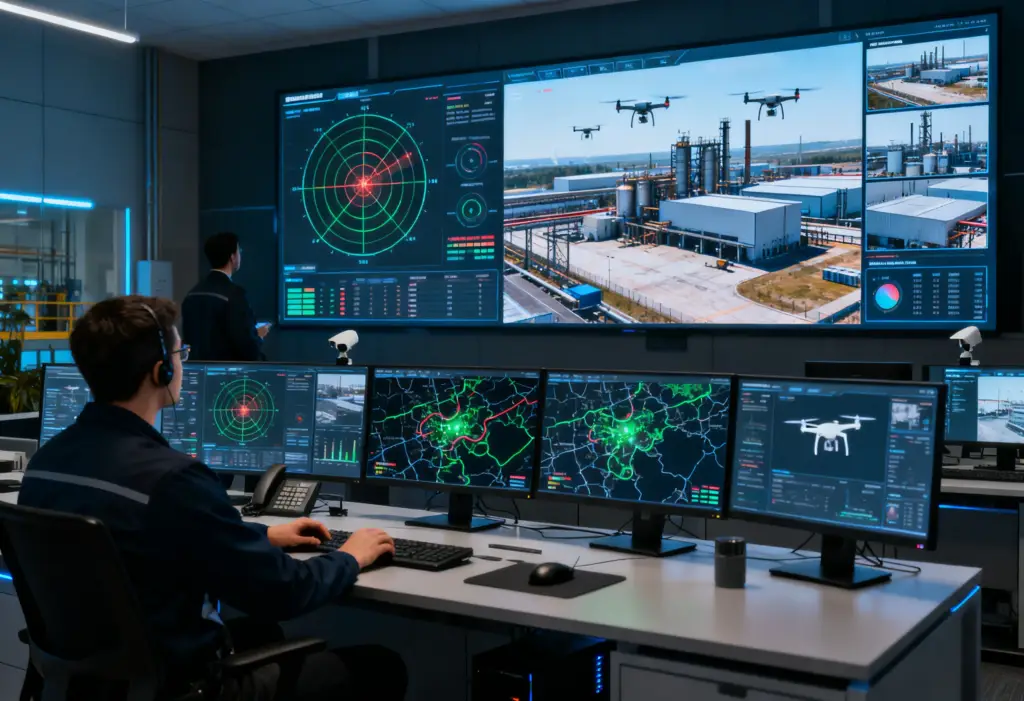
Drones carry real, substantial promise, but without proactive action, they carry real peril too. As drones weave deeper into cities and daily life, the need for coordinated, deliberate action becomes more urgent, not less. Regulation needs to get sharper, enforcement needs to get smarter, and public awareness needs to broaden. Above all, effective countermeasure systems need to be ready to neutralize threats before they happen, not after.
That’s the specific gap Indrajaal is built to close, not just as a technology vendor, but as a dedicated aerial shield for critical assets and populations. As the skies fill with both possibility and risk in equal measure, building genuinely safe drone integration into daily life requires exactly this kind of dedicated defensive infrastructure.
Want to safeguard your airspace? Talk to Indrajaal’s experts today.
Frequently Asked Questions
Privacy and espionage, smuggling and criminal use, aviation and public safety threats, ethical and legal questions in warfare, environmental disruption, and cybersecurity risk are the six major categories of documented drone misuse.
Yes. Because modern drones are effectively flying computers, a drone flown near a building can be used to intercept Wi-Fi signals or otherwise probe a network, without the operator needing physical access to the premises.
Estimates vary by research firm, with figures ranging from roughly $1.39 billion (MarketsandMarkets) to $4.87 billion (BlueWeave) by 2030, reflecting strong, sustained growth across defense, agriculture, and commercial applications.
The central debates concern civilian harm in conflict zones, accountability for autonomous decision-making, and how international law should adapt to weapons systems capable of identifying and engaging targets with reduced human oversight.
Conclusion
The risks covered here span far beyond the “drone attack” scenario most people picture first: privacy violations, smuggling, aviation disruption, unresolved ethical questions in warfare, environmental impact, and outright cyber intrusion are all part of the same underlying shift. As drone adoption accelerates across India and globally, treating these as separate, isolated problems undersells how connected they actually are, and how urgently coordinated regulation, enforcement, and dedicated counter-drone infrastructure need to keep pace.