

This guide explains why cities are uniquely difficult to protect from drone threats and how Indrajaal Urban addresses that. It covers the specific risk profile of dense urban environments, real-world incidents from contraband smuggling to a drone reaching a national leader’s rooftop, how city-scale counter-drone deployment differs from single-site protection, and how urban airspace security can coexist with the legitimate drone activity cities increasingly depend on.
Urban drone defense protects entire city areas rather than single sites, using AI-driven detection, real-time tracking, and precision countermeasures across a modular architecture. Cities are harder to secure than restricted sites because dense infrastructure, high population, and constant legitimate drone activity make malicious drones far harder to distinguish from routine, authorized flights.
Key takeaways
- Urban environments face a distinct drone risk profile: high population density, concentrated critical infrastructure, and countless plausible cover stories for a drone’s presence, all of which make detection and threat assessment harder than in open or restricted terrain.
- Real-world incidents already illustrate this risk, including drones used to smuggle contraband into prisons in New Delhi and London, and a 2015 incident in which a drone carrying radioactive sand landed on the roof of the Japanese Prime Minister’s office in Tokyo.
- Indrajaal Urban is built specifically for city-scale deployment, using a modular architecture that scales from a single facility to an entire metropolis without requiring a fundamentally different system.
- The same drone technology creating city-wide benefits (traffic monitoring, pollution measurement, emergency response) is also what makes urban airspace harder to secure, since legitimate and malicious drone activity increasingly look identical from the ground.
Table of Contents
The Reality of Urban Drone Threats
Picture a small, easy-to-miss drone hovering above a crowded city street. Within minutes, it could disrupt part of a power grid, compromise sensitive data, or put lives directly at risk. This isn’t a hypothetical scenario. It’s an operational reality city security planners now have to account for.
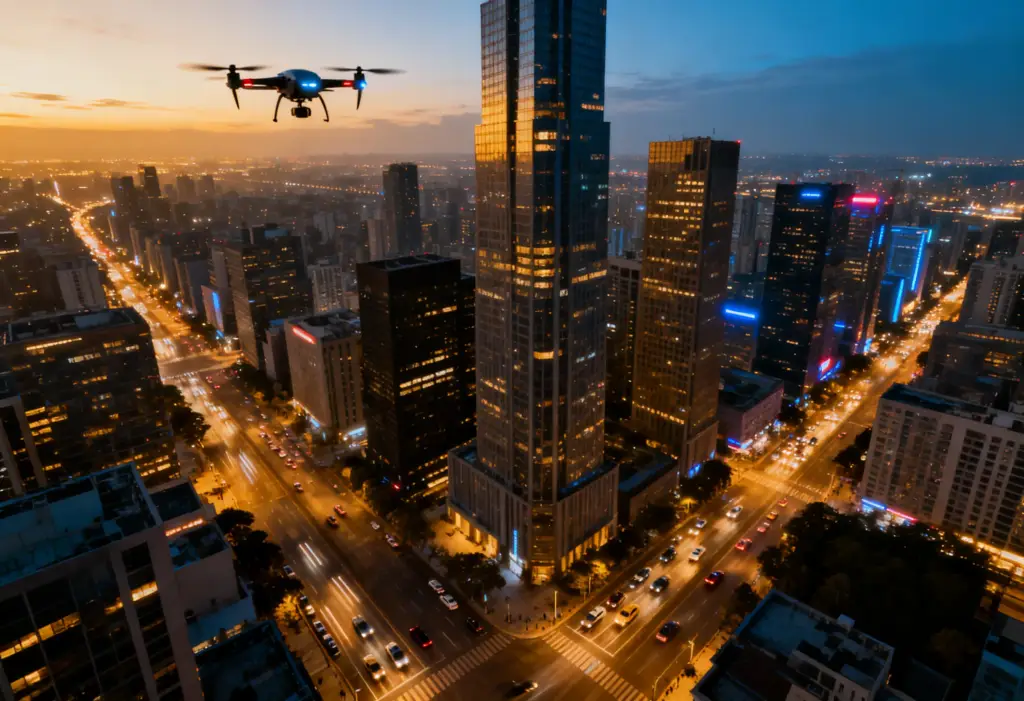
The rise of drones has brought real benefits, from faster medical deliveries to more effective rescue missions. Alongside those gains sits an uncomfortable truth: the same accessibility and versatility that make drones useful also make them tools for mischief and, in the worst cases, genuine harm.
India’s Home Minister Amit Shah has repeatedly emphasized specialized anti-drone capability as part of the country’s border security priorities. But the question this raises for city security leaders is a different one: what about the skies above the cities themselves, not just the borders?
But what about the skies above our cities?
For the technical foundation behind these systems, see: A Guide to Counter-Unmanned Aerial Systems (C-UAS): Everything You Need to Know
The Double-Edged Sword of Drone Advancements
The future of drones is rapidly expanding, with millions set to operate across both public and private sectors. By 2030, the global drone market is projected to soar to $54.6 billion, revolutionizing industries with applications ranging from medical supply deliveries to real-time surveillance and infrastructure inspections.
Governments and organizations worldwide are already harnessing drone technology for transformative solutions. In Dubai, drones monitor and manage traffic congestion, reducing accident response times. London’s Mayor’s office deploys drones to measure air pollution and detect illegal emissions, while the NYFD leverages thermal-equipped drones to assess fires, track firefighters, and enhance rescue operations.
However, as drones become more ingrained in daily operations, they also introduce a complex web of security challenges that organizations cannot ignore.
Drones, with their small size and agility, can easily bypass traditional security systems, making them a powerful tool for malicious activities. From smuggling contraband to unauthorized surveillance and even targeted attacks, rogue drones pose an escalating threat across critical sectors, including military bases, government facilities, airports, and densely populated urban areas.
Related reading: Securing the Skies: Safeguarding Critical Infrastructure Against Drone Threats
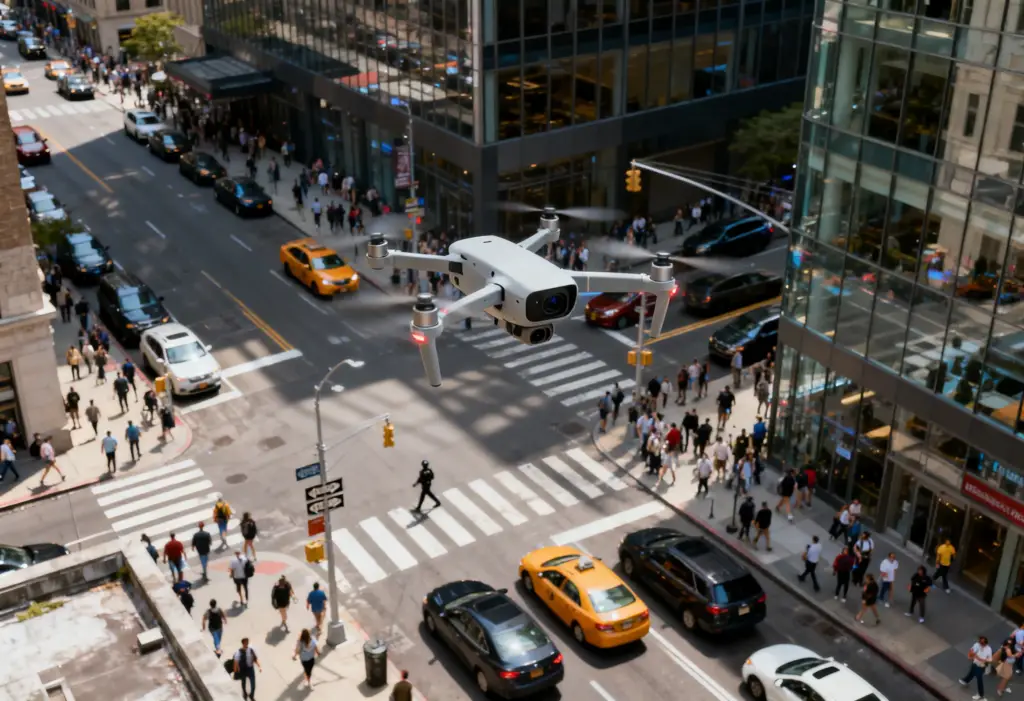
Recent Incidents Illustrating the Urban Drone Threat
Beyond physical risks, these threats undermine economic stability and public trust in security measures worldwide.
Some recent real-world incidents highlighting the growing urgency of this issue include:
- Smuggling and contraband delivery (New Delhi, India and London, UK): Drones were intercepted smuggling drugs and mobile phones into jails, prompting authorities to enhance anti-drone defences.
- Surveillance and privacy violations: Paparazzi frequently exploit drones worldwide to invade celebrity homes, sparking legal battles over privacy rights.
- Weaponized and terrorist drones (Caracas, Venezuela, 2018). A drone carrying explosives targeted then-President Nicolás Maduro during a public speech, an early and stark illustration of drone-enabled attack risk.
- Radiological and security risk (Tokyo, Japan, April 2015). A drone carrying a small quantity of radioactive sand landed on the roof of the Japanese Prime Minister’s office, raising serious questions about how vulnerable even highly secured government buildings can be to a small, hard-to-detect aircraft.
These aren’t distant or theoretical scenarios. The threat of rogue drones in urban environments is current and ongoing, which is exactly why countermeasures need to keep pace.
Safeguarding Areas With Indrajaal Urban
Urban environments are particularly vulnerable to drone threats due to their high population density and concentration of critical infrastructure. Indrajaal Urban specifically addresses these challenges, ensuring public safety by detecting, identifying, and neutralizing rogue drones in real time. With a comprehensive approach, Indrajaal creates a protective shield over urban landscapes, providing peace of mind to residents and authorities alike.
Our systems use state-of-the-art technologies, including AI-driven threat detection, real-time tracking, and precision countermeasures. This ensures that our teams effectively manage even the most sophisticated drone threats. Additionally, the modular design allows Indrajaal to scale according to specific requirements, making it suitable for a wide range of applications, from securing a single facility to protecting entire cities.
The system doesn’t wait for threats to materialize. Our advanced detection ensures early identification and swift neutralization of rogue drones. From small towns to megacities, Indrajaal’s flexible architecture can be customized to suit any environment. By fostering a drone-ready ecosystem, we ensure that technological advancements are harnessed responsibly and sustainably. Our vision is rooted in collaboration with governments, private entities, and technology partners – to build a comprehensive and unified defence network.
For the full technical architecture, see: Indrajaal: Made in India, Built for India’s Freedom
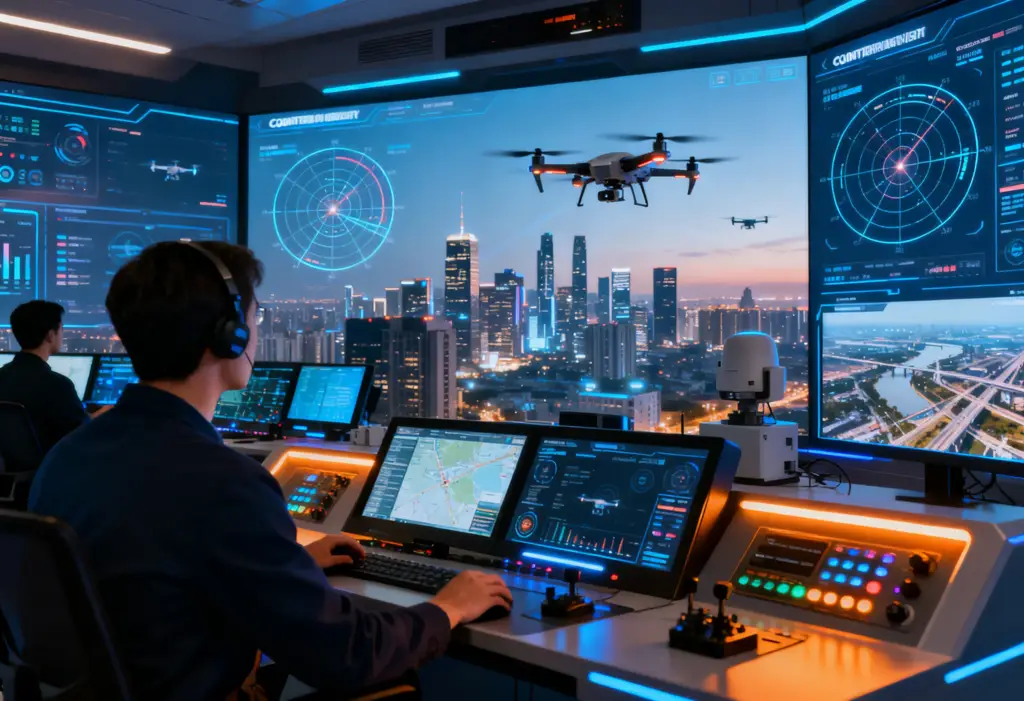
Protecting the Future of Urban Airspace
As drones become an integral part of modern life, their dual nature as both tools of innovation and potential threats cannot be ignored. The growing drone menace requires proactive measures, and Indrajaal is leading the charge. By combining state-of-the-art defence mechanisms with innovative infrastructure development, Indrajaal is not just protecting cities but also paving the way for a future where drones can be safely integrated into society.
Ready to safeguard your city’s airspace? Connect with Indrajaal’s experts today.
The Threat Is Real, but So Is the Solution
With Indrajaal, we can ensure that the skies remain safe, secure, and ready for the future. Whether it’s safeguarding a bustling metropolis, securing critical infrastructure, or supporting national defence, Indrajaal is the ultimate shield against the evolving drone menace.
Frequently Asked Questions
Urban environments combine high population density, dense infrastructure, and constant legitimate drone activity (deliveries, media, inspection), making it genuinely harder to distinguish malicious drone activity from routine, authorized use compared to a restricted military or industrial site.
Yes, a drone equipped with the right payload or sensor package could physically disrupt power infrastructure or be used to intercept wireless data, which is part of why continuous urban airspace monitoring matters, not just perimeter security at individual facilities.
Indrajaal Urban is the city-scale deployment of Indrajaal’s counter-drone platform, using AI-driven detection, real-time tracking, and precision countermeasures across a modular architecture that scales from a single facility to an entire metropolis.
Yes. In April 2015, a drone carrying radioactive sand landed undetected on the roof of the Japanese Prime Minister’s office in Tokyo, a widely cited example of how even secured government buildings can be vulnerable to small, hard-to-detect aircraft.
By pairing continuous, AI-driven detection and response capability with clear operational frameworks for legitimate drone use (deliveries, inspections, emergency response), authorized activity isn’t disrupted while unauthorized activity is caught quickly.
Conclusion
Cities are becoming genuinely drone-dependent, for deliveries, inspections, emergency response, and more, at the same time that the threat posed by unauthorized drones keeps growing. Treating those as separate problems doesn’t work. A city-wide, AI-driven system like Indrajaal Urban is built to let both realities coexist: enabling legitimate drone activity to continue uninterrupted, while detecting and neutralizing the unauthorized activity that puts residents, infrastructure, and public trust at risk.