

This guide covers everything decision-makers need to know about counter drone systems. It explains what a C-UAS is and how it works, why the threat has accelerated, the six criteria that separate a credible platform from a marketing pitch, the technologies behind detection and neutralisation, the regulatory framework governing deployment, and the challenges that remain unsolved.
A counter drone system (C-UAS) is an integrated security solution that detects, identifies, tracks, and neutralises unauthorised unmanned aerial vehicles within protected airspace. It combines multiple sensor types (radar, RF, electro-optical, acoustic) with mitigation tools (jamming, spoofing, protocol takeover, kinetic interception) in a single coordinated workflow.
Key takeaways
- Counter-drone systems (also known as Counter-Unmanned Aerial Systems or C-UAS) are integrated defense solutions designed to detect, track, identify, and neutralize unauthorized UAVs. They typically combine multiple sensor modalities (radar, RF scanners, cameras, acoustic arrays, etc.) with mitigation tools (jammers, spoofers, interceptors) in a seamless workflow.
- The global C-UAS market is on a steep growth curve — projected to expand from roughly $14.4 billion in 2026 to over $55 billion by 2034, at a CAGR above 22%, according to Fortune Business Insights.
- The best counter drone systems in 2026 are autonomous, multi-sensor, AI-native platforms — not single-sensor point solutions — because standalone jammers or radars alone cannot handle swarms, GPS-denied environments, or fully autonomous drones.
- Evaluating a C-UAS for procurement means scoring vendors against detection range, classification accuracy, mitigation options (soft-kill vs. hard-kill), autonomy level, scalability, and regulatory compliance — not just headline specs.
- Regulatory alignment (aviation law, spectrum law, rules of engagement, data privacy) is now a procurement gate, not an afterthought.
Table of contents
- Introduction
- What Is a Counter Drone System?
- Why Counter Drone Systems Matter More Than Ever
- Key Components of a Counter Drone System
- Why Are Counter Drone Systems Important in 2026?
- How Do Counter Drone Systems Work? (Step-by-Step)
- Automation and Intelligent Response
- Latest Innovations in Counter Drone Technology (2026 & Beyond)
- Regulatory Landscape & Legal Considerations
- Why Legal Compliance Matters
- Challenges in Counter Drone Deployment
- Frequently Asked Questions (FAQs)
Introduction
Drones are no longer a niche threat. In 2026, an unauthorised drone can shut down an airport runway, breach a border, smuggle contraband, or loiter over a refinery, and it can do it with hardware costing less than a laptop. For Chief Security Officers, defence procurement officials, and infrastructure operators, the question is no longer whether to invest in counter-drone defence. It’s which system actually holds up under real threat conditions.
This guide breaks down what counter drone systems are, how they work, what separates a credible C-UAS platform from a marketing pitch, and what decision-makers need to know before procurement, technically, operationally, and legally.
What Is a Counter Drone System?
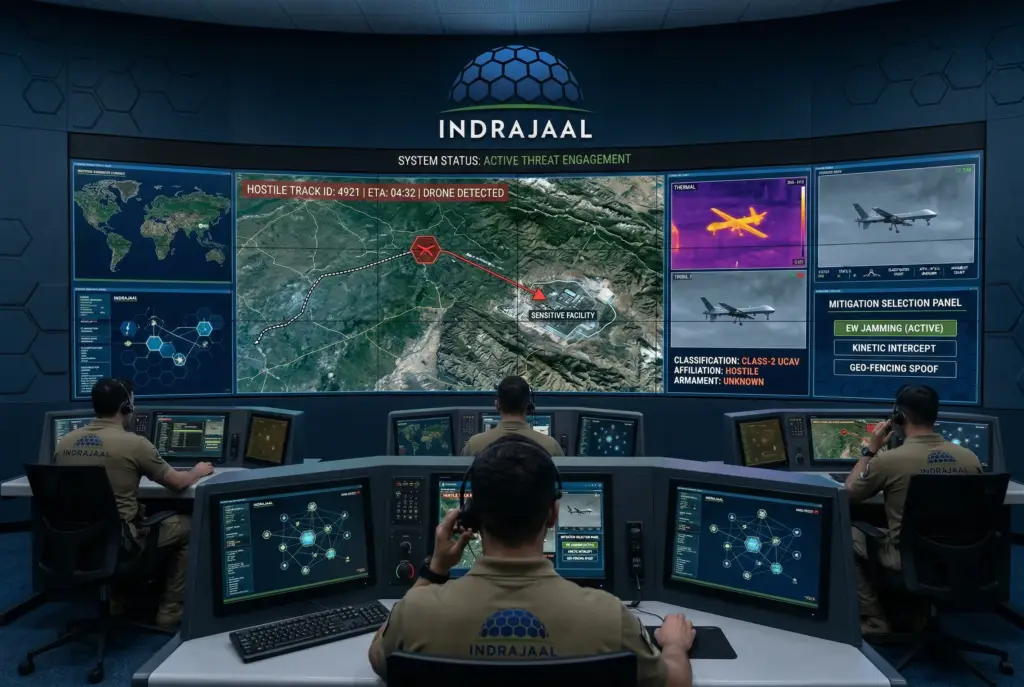
A counter drone system (C-UAS) is an integrated security solution that detects, identifies, tracks, and neutralizes unauthorized unmanned aerial vehicles (UAVs) within protected airspace.
It’s also referred to as:
- CUAS (Counter-Unmanned Aerial System)
- Anti-drone system
- Counter-UAS technology
- Anti-drone solution
Unlike conventional air defense – built to intercept large aircraft or missiles at altitude, a C-UAS is purpose-engineered for small, slow, low-flying, and often low radar-cross-section targets that traditional systems were never designed to see.
Every credible counter drone system is built around four objectives:
- Detect drone presence early, before it reaches a restricted zone
- Identify and classify the object – drone vs. bird, authorized vs. hostile
- Track its flight path, speed, altitude, and likely origin
- Neutralize it safely, proportionately, and with minimal collateral effect
In simple terms, a counter drone system acts as a smart shield that continuously monitors and protects the sky above critical locations. Indrajaal Infra and Indrajaal Urban are examples of a wide-area C-UAS. These are Indian-designed systems using AI to detect and neutralize threats (including drone swarms) over large regions.
Why Counter Drone Systems Matter More Than Ever
Drone adoption has scaled across delivery, agriculture, filmmaking, surveillance, and military operations, and misuse has scaled with it. Unauthorised drones have already disrupted major airports, ferried narcotics and weapons across borders, conducted espionage, and been weaponised as loitering munitions in active conflicts.
Five forces are converging to make C-UAS a board-level priority rather than a security-team one:
- Explosive growth in drone usage. Commercial, recreational, and military drone adoption keeps climbing, and so does the volume of unauthorised flights security teams must screen.
- Critical infrastructure is now a target class. Airports, power plants, refineries, data centres, ports, and government buildings all face growing drone incursions. A single small drone can ground airport operations for hours.
- Borders are a live drone battleground. In 2025, India’s Border Security Force neutralised 255 Pakistani drones used primarily to traffic narcotics and weapons, a scale of incursion legacy point-defence systems were never built to absorb. Poland has committed roughly $2.2 billion to layered anti-drone fortifications along its eastern border in response to a similar threat pattern.
- Public safety at scale. Stadiums, political gatherings, and mass events require dependable airspace security to prevent both physical harm and public panic.
- Real financial exposure. Drone-related disruptions already cost organisations millions in downtime, delayed operations, and incident response. Airspace security is now an operating-cost line item, not a discretionary spend.
The market reflects this urgency: Fortune Business Insights projects the global counter-UAS market growing from roughly $14.4 billion in 2026 to $55.25 billion by 2034, a 22.4% CAGR, while MarketsandMarkets forecasts $20.31 billion by 2030 from $6.64 billion in 2025, a 25.1% CAGR, with AI-powered C-UAS identified as the fastest-growing technology segment.
Key Components of a Counter Drone System
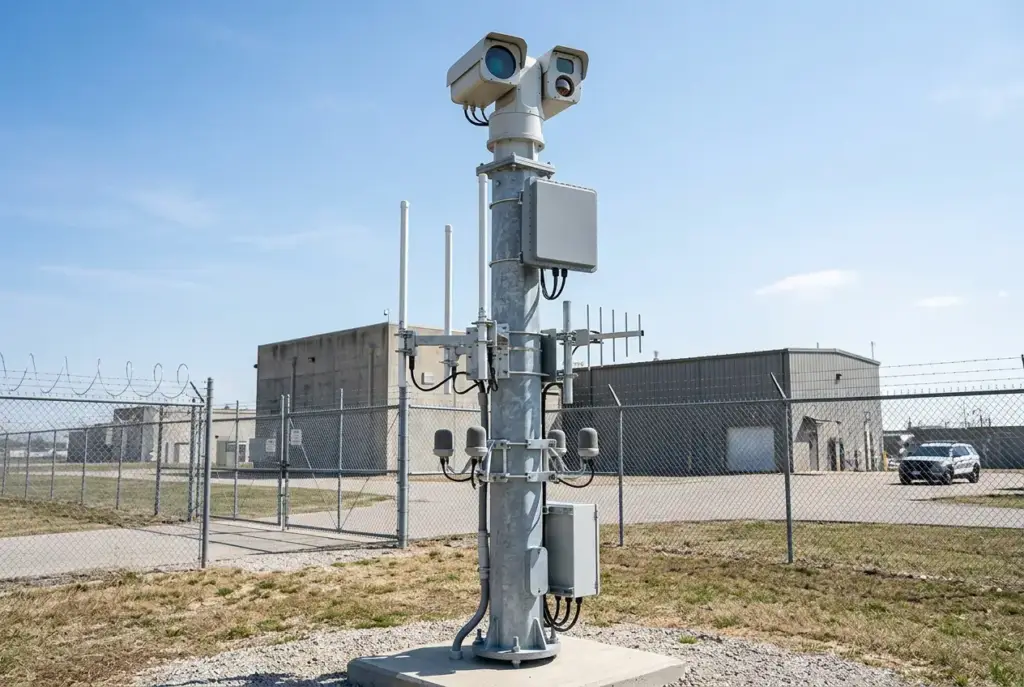
Modern Counter Drone Systems use a layered defence approach. Instead of relying on one sensor, they combine multiple technologies to increase accuracy and reduce false alarms.
1. Detection Technologies
Detection is the foundation of any effective anti drone system.
Common detection tools include:
- Radar systems – Detect airborne objects based on movement and size.
- RF (Radio Frequency) sensors – Identify drone communication signals.
- Electro-optical (EO) and infrared (IR) cameras – Provide visual confirmation
- Acoustic sensors – Detect drone sound signatures.
Using multiple sensors ensures reliable detection even in complex environments such as urban areas or near airports.
2. Identification and Classification
Once an object is detected, the system must answer: is it a drone or a bird? Authorised or unauthorised? What model, and on what frequency? AI-driven command software analyses behaviour and signal patterns in real time to answer this in seconds rather than minutes, cutting false positives that would otherwise consume operator attention on non-threats.
3. Tracking and Monitoring
Once classified, the system continuously tracks speed, altitude, flight path, and probable launch point. Advanced CUAS platforms can even estimate an operator’s ground location through RF triangulation, critical intelligence for law enforcement follow-up, not just in-the-moment defence.
4. Mitigation and Neutralization
The final step involves neutralizing the threat using appropriate anti drone technology.
Common methods include:
- RF jamming – Disrupts communication between drone and pilot
- GPS spoofing – Misleads drone navigation systems
- Protocol takeover – Gains control and lands the drone safely
- Kinetic interception – Nets or interceptor drones (used selectively)
Modern counter drone technology prioritizes non-kinetic mitigation to avoid collateral damage and communication interference.
Why Are Counter Drone Systems Important in 2026?
1. Rapid Growth of Drone Usage
Drone adoption is expanding globally. Commercial, recreational, and military drone use has increased significantly. This rise also increases misuse.
2. Protection of Critical Infrastructure
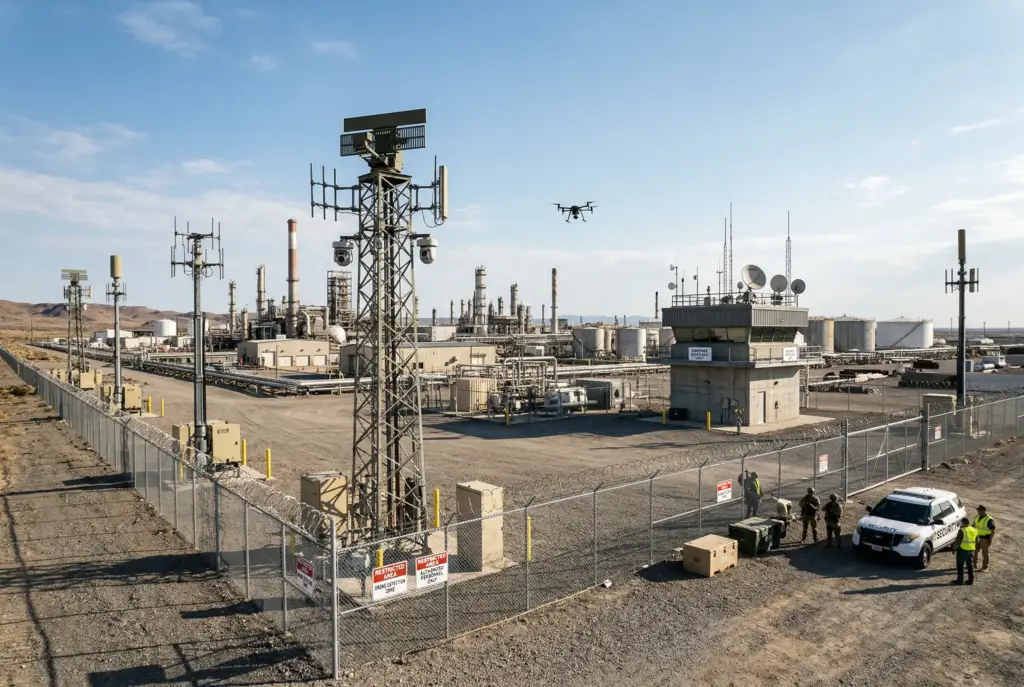
Airports, power plants, oil refineries, data centers, government buildings, and defence installations face growing drone threats. Even a small drone can shut down airport operations for hours.
Counter drone systems provide continuous airspace surveillance and protection.
3. National Security and Border Protection
Military facilities and border regions are vulnerable to surveillance drones and weaponized UAVs. A strong CUAS network is now essential for layered national defence.
4. Public Safety at Large Events
Stadiums, political gatherings, and public celebrations require airspace security. An effective anti drone system prevents panic and ensures crowd safety.
5. Economic Risk Mitigation
Drone disruptions can cause millions in financial losses. Investing in counter drone systems reduces long-term risk and operational downtime.
In today’s environment, airspace security is as important as cybersecurity.
How Do Counter Drone Systems Work? (Step-by-Step)
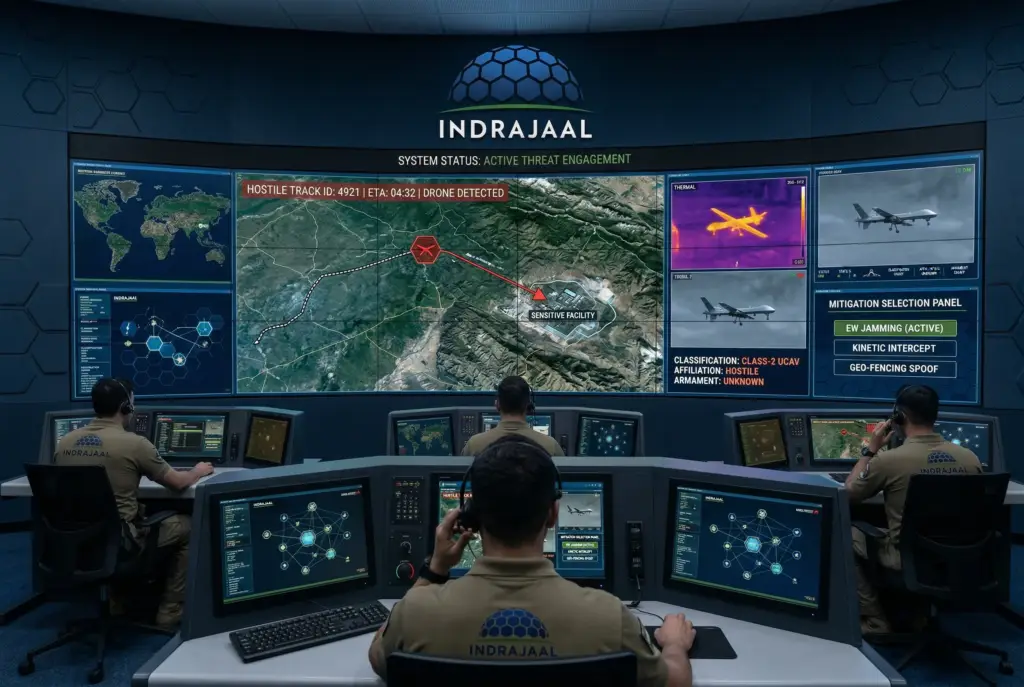
Understanding how Counter Drone Systems operate helps clarify why they are so effective against modern UAV threats. A well-designed counter unmanned aerial system (CUAS) follows a structured, multi-layered process to ensure accurate detection and safe mitigation.
Here is a more detailed breakdown of each stage:
Step 1: Continuous Surveillance
Counter drone systems begin with constant airspace monitoring. Sensors operate 24/7 to create a protective dome over a specific area.
These systems use a combination of:
- Radar to scan the sky for moving objects
- RF sensors to monitor communication frequencies
- Optical and infrared cameras for visual confirmation
Continuous surveillance ensures that even small or low-flying drones are detected early. Early detection is critical because response time determines mitigation success.
Modern anti drone technology uses overlapping sensor coverage to eliminate blind spots and reduce false alarms.
Step 2: Detection
Once an object enters the monitored airspace, the system detects abnormal activity.
Radar identifies:
- Small moving objects
- Low-altitude flight patterns
- Unusual speed or direction
At the same time, RF sensors scan for drone-controller communication signals. Many commercial drones transmit identifiable RF signatures, which helps the system recognize them quickly.
By combining radar and RF detection, counter drone systems improve reliability and reduce confusion between drones, birds, and other airborne objects.
Step 3: Verification
After detection, the system must confirm whether the object is truly a drone.
AI-powered command software analyzes:
- Flight behavior
- Signal patterns
- Object size and movement characteristics
This verification step is important because reacting to false alarms could disrupt normal operations. Advanced CUAS platforms use machine learning models trained to differentiate drones from birds, helicopters, or debris.
In some systems, cameras automatically zoom in to provide visual confirmation before escalation.
Step 4: Threat Assessment
Once verified as a drone, the system evaluates its level of risk.
It assesses:
- Is the drone approaching a restricted zone?
- Is it hovering over sensitive infrastructure?
- Is it flying in a suspicious pattern?
- Does it match known hostile signatures?
The counter unmanned aerial system assigns a threat score based on behavior, proximity, and intent indicators.
This step ensures that mitigation measures are proportionate and legally compliant. Not all detected drones are hostile—some may be authorized or harmless.
Step 5: Neutralization
If the drone is classified as a threat, appropriate anti drone measures are activated.
Common neutralization methods include:
- RF jamming to break the link between drone and operator
- GPS spoofing to redirect or safely land the drone
- Protocol takeover to gain direct control
- Controlled kinetic interception (when necessary)
Modern counter drone technology prioritizes non-destructive solutions to minimize collateral damage and avoid interference with civilian systems.
Automation and Intelligent Response
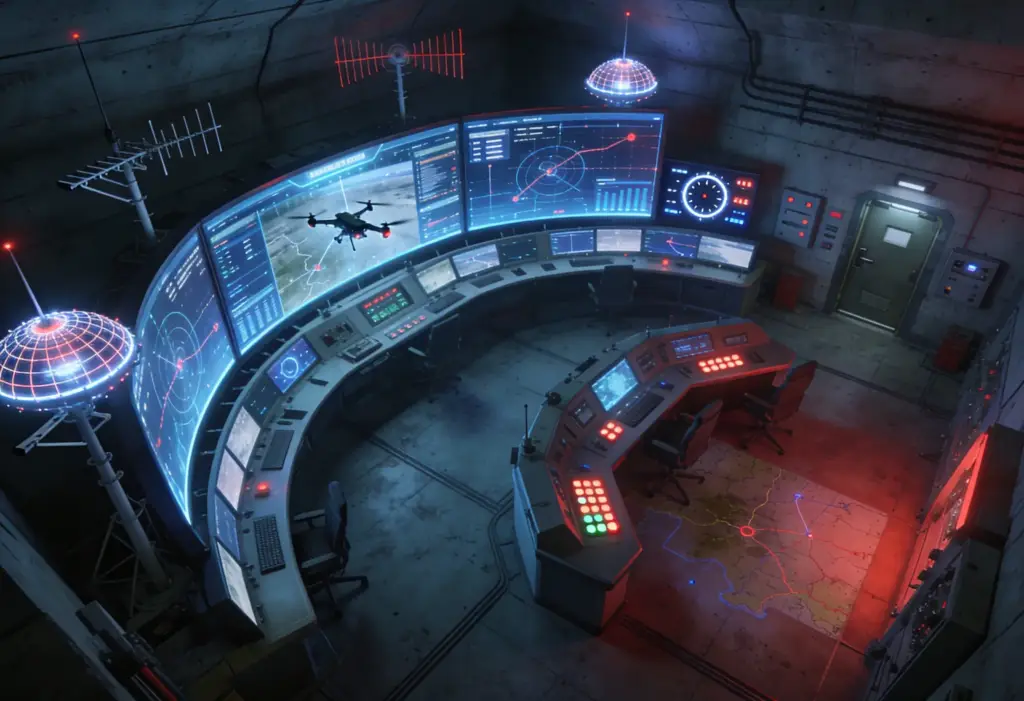
Today’s advanced CUAS platforms automate much of this process. AI-driven command software reduces human reaction time from minutes to seconds.
Automation provides:
- Faster response
- Higher accuracy
- Lower operational workload
- Scalable defence for large areas
Human operators still oversee final decisions in high-security environments, but intelligent automation ensures precision and speed.
Latest Innovations in Counter Drone Technology (2026 & Beyond)
Counter drone systems are evolving rapidly to match sophisticated drone threats.
AI-Driven Autonomous Response
Artificial intelligence now enables automated threat assessment and mitigation activation within seconds.
Drone Swarm Detection
Advanced systems can detect and respond to multiple drones operating together, known as swarms.
360-Degree Integrated Systems
Modern counter unmanned aerial systems combine radar, RF, optical sensors, and AI command software into one unified architecture.
Cyber-Based Neutralization
Instead of destroying drones physically, new counter drone technology uses digital takeover methods for safer mitigation.
Low-Interference Mitigation
New anti drone solutions minimize disruption to civilian communication networks.
By 2026 and beyond, CUAS platforms are becoming more intelligent, scalable, and network-integrated.
Autonomous Drone Defense Domes
The future of counter drone technology lies in integrated autonomous systems that create virtual “domes” of protection over critical areas.
These systems combine:
- Radar and sensor networks for early warning across thousands of square kilometers
- AI-powered command centers that analyze threats autonomously
- Autonomous interceptor drones (Level 5 autonomous systems) that respond within seconds
- Jamming and spoofing layers for non-kinetic neutralization
- Hard-kill capabilities for confirmed threats
- Networked mesh communication that maintains control even if individual components fail
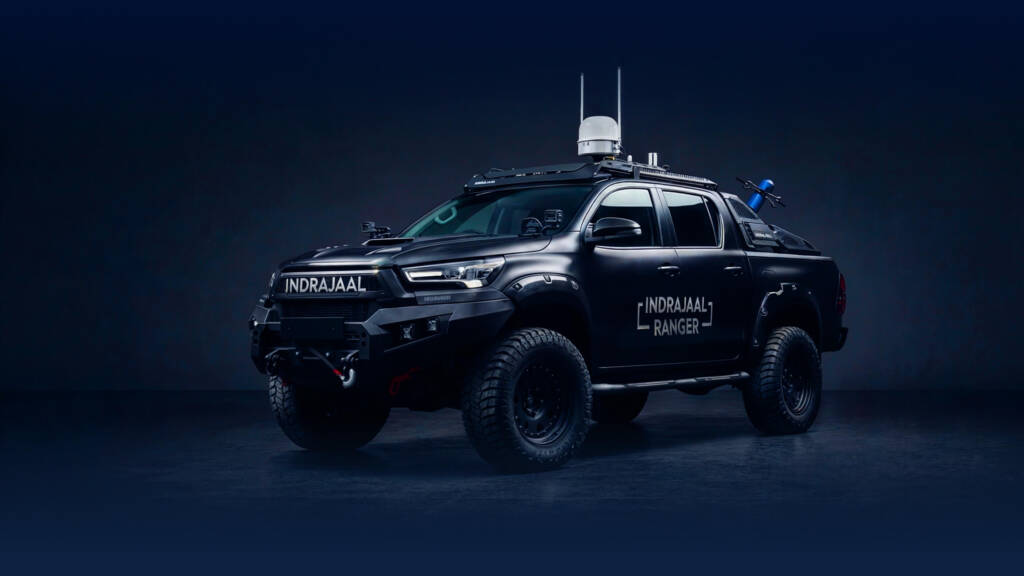
Companies like Indrajaal are developing integrated systems like the Indrajaal Ranger—a rapid-response, vehicle-deployed counter-UAS system engineered for active border operations and mobile defense needs. Integrated with cyber takeover capabilities, GNSS spoofing, RF jamming, and a spring-loaded kill switch, Ranger neutralizes rogue drones within a 4 km combat envelope autonomously. These represent the next generation of airspace security.
Regulatory Landscape & Legal Considerations
Deploying Counter Drone Systems is not only a technical decision—it is also a legal and regulatory responsibility. Because CUAS solutions interact with airspace, radio frequencies, surveillance technologies, and sometimes force-based mitigation tools, they must comply with national and international laws.
As drone threats increase, governments are actively updating regulations to balance security needs with aviation safety, telecom protection, and privacy rights.
Below are the key regulatory areas organizations must understand before implementing an anti drone system.
Aviation Regulations
Airspace is controlled by national civil aviation authorities. Any action that affects an aircraft—crewed or uncrewed must comply with aviation laws.
Key considerations include:
- Protection of controlled and restricted airspace
- Coordination with Air Traffic Control (ATC)
- Differentiation between authorized and unauthorized drones
- Avoidance of interference with legitimate aviation operations
Because drones share airspace with commercial aircraft, improper mitigation could create safety risks. Therefore, counter drone systems deployed near airports or urban areas must integrate carefully with aviation frameworks.
Spectrum Laws
RF jamming must follow telecommunications guidelines.
Rules of Engagement (Use of Force Policies)
If kinetic mitigation methods are used—such as interceptor drones or projectile-based systems—clear authorization protocols must exist.
Legal frameworks typically define:
- Who has authority to neutralize a drone
- Under what threat level action can be taken
- Documentation and audit requirements
- Liability in case of collateral damage
An effective counter unmanned aerial system must align with established rules of engagement to ensure lawful and proportionate response.
Privacy and Data Protection Regulations
Many counter drone systems rely on cameras, infrared imaging, and signal tracking. These technologies may capture personal or sensitive data.
Organizations must comply with:
- National data protection laws
- Surveillance and monitoring regulations
- Data storage and retention policies
- Transparency and accountability requirements
For example, camera-based detection near public areas must avoid unnecessary recording of individuals. Responsible deployment ensures security without violating privacy rights.
Why Legal Compliance Matters
Failure to comply with aviation, telecom, or privacy regulations can result in:
- Heavy fines
- Operational shutdowns
- Legal liability
- Reputational damage
Therefore, implementing Counter Drone Systems requires close coordination between technical teams, legal advisors, regulatory bodies, and security authorities.
A well-planned CUAS deployment not only protects airspace—but also ensures full legal and ethical compliance.
Challenges in Counter Drone Deployment
Despite advancements, challenges remain:
- Detecting nano and micro drones
- Differentiating friendly from hostile UAVs
- Preventing interference with legitimate signals
- Managing high deployment costs
- Addressing evolving drone swarm tactics
Continuous research and development are essential to stay ahead of threats.
Frequently Asked Questions (FAQs)
A counter drone system (C-UAS) is an integrated security solution that detects, identifies, tracks, and neutralizes unauthorized drones in protected airspace, combining sensors like radar, RF, and cameras with mitigation tools like jammers and spoofers.
CUAS stands for Counter-Unmanned Aerial Systems — the technologies and platforms used to detect and safely neutralize hostile or unauthorized drones.
Most systems use RF jamming, GPS/GNSS spoofing, protocol takeover, or, in specific scenarios, controlled kinetic interception — with non-kinetic methods preferred to avoid collateral damage.
The best systems for critical infrastructure combine multi-sensor detection, high classification accuracy in cluttered environments, both soft-kill and hard-kill mitigation, full autonomy, and mesh-based scalability across large areas — not a single point sensor or jammer.
Airports, military bases, border regions, power plants, refineries, ports, government buildings, and large public events all rely on C-UAS deployment today.
Yes — counter drone technology developed after 2025 is specifically engineered with swarm detection and simultaneous multi-target mitigation, a capability legacy single-sensor systems generally lack.
Soft-kill methods (RF jamming, GPS spoofing, protocol takeover) disable or redirect a drone without physically destroying it, minimizing collateral risk. Hard-kill methods (interceptor drones, nets, kinetic strikes) physically disable the drone and are typically reserved for confirmed, high-severity threats.
Estimates vary by research firm, but most place the 2026 global C-UAS market between roughly $8.5 billion and $14.4 billion, with double-digit CAGR growth projected through the early 2030s as governments convert short-term drone responses into long-term procurement programs.
Deployment is legal when it complies with national aviation law, telecom/spectrum regulations, and — where kinetic or jamming measures are used — documented rules of engagement. Legal review should happen during system selection, not after installation.
Conclusion
Counter drone systems have moved from a specialized defense niche to essential infrastructure – the airspace equivalent of a firewall. As drones become cheaper, more autonomous, and more frequently weaponized, the cost of not having a credible C-UAS deployment keeps rising, in dollars, downtime, and risk exposure.
The organizations getting this right in 2026 aren’t buying point solutions — a jammer here, a radar there. They’re deploying integrated, AI-native, autonomous platforms that fuse detection, classification, tracking, and mitigation into one command architecture, built to hold against swarms and adapt as threats evolve.
Evaluating counter drone systems for your organization? Talk to Indrajaal’s team about a deployment built for your specific terrain, threat profile, and regulatory environment.