

This guide examines how counter-drone technology fits into military intelligence and national preparedness. It covers the lessons recent conflicts hold for India, the three core components of any military-grade counter-drone system (Sensors, C4ISR, and Effectors), and a full glossary of Indrajaal’s 12 proprietary technology modules, from the Zombee™ interceptor drone to the SpiderMesh™ mesh network.
A military counter-drone system rests on three components working as one: Sensors (radar, RF, acoustic, and optical detection), C4ISR (the command-and-control layer that fuses sensor data into actionable intelligence), and Effectors (jamming, directed-energy, or interception systems that neutralize confirmed threats). Remove any one, and the system can’t reliably close the loop from detection to neutralization.
Key takeaways
- The Russia-Ukraine war, since Russia’s full-scale invasion in February 2022, marked the first large-scale “drone war,” with UAVs used extensively for surveillance, reconnaissance, and as loitering munitions — permanently changing military doctrine around low-cost aerial threats.
- Israel’s defense against a major coordinated drone-and-missile attack from Iran underscored, for India and other nations, the need for layered, rapid-response counter-drone capability at national scale.
- A military-grade counter-drone system rests on three components: Sensors (detection), C4ISR (command, control, and intelligence fusion), and Effectors (engagement) — remove any one, and the system can’t reliably close the loop from detection to neutralization.
- India’s Ministry of Civil Aviation has moved on this with its National Counter Rogue Drone Guideline (task forces, no-fly zones), though substantial gaps in military-grade technology and defense capability remain.
- Indrajaal’s approach is built on 12 proprietary technology modules — from autonomous interceptor drones (Zombee™) to a 4,000 sq. km mesh communication network (SpiderMesh™) — that operate independently or in combination as one unified, autonomous defense architecture.
Table of Contents
The Evolving Role of Drones in Modern Warfare
Russia’s full-scale invasion of Ukraine, launched in February 2022, marked the beginning of what’s widely regarded as the first genuine large-scale drone war. Drones have been used extensively for surveillance, reconnaissance, and as loitering munitions, fundamentally changing how modern militaries plan and fight.
Given how central drones have become to active conflicts, strengthening national counter-drone capability isn’t a future consideration — it’s a present one. In this piece, we look at how cutting-edge counter-drone technology fits into military intelligence and national preparedness, with a closer look at the specific technology components that make a system genuinely effective.
Lessons for India
Recent conflicts carry direct lessons for India’s defense posture. Israel’s defense against a major coordinated drone-and-missile attack from Iran, for instance, demonstrated the value of being prepared for large-scale, multi-vector aerial assault — not just isolated rogue-drone incidents.
A few takeaways stand out from these conflicts:
- Effective counter-drone systems are now essential, not optional, for mitigating the risk posed by rogue drones and coordinated attacks alike.
- Strong regulation matters as much as technology – governing the spread and use of drones is central to maintaining airspace safety and security.
- Asymmetric warfare is now central to modern conflict planning, with unconventional tactics and low-cost weaponry (including consumer-grade drones) reshaping what militaries need to defend against.
- Sustained R&D investment is non-negotiable. Staying ahead of emerging drone threats requires continuous, not one-time, investment in detection and countermeasure technology.
India’s Ministry of Civil Aviation has responded with the National Counter Rogue Drone Guideline, which includes measures like dedicated task forces and no-fly zones. It’s a meaningful step — but a real gap remains between civil-aviation-level policy and the military-grade technology and defense capability needed to match the threat environment described above.
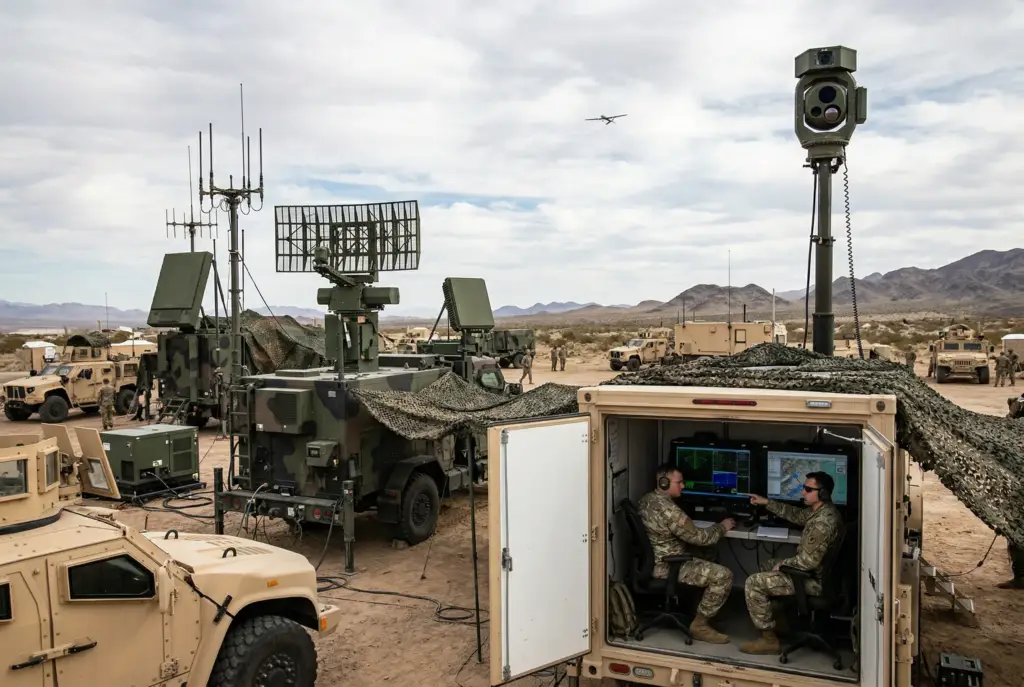
The Need for Counter-Drone Technology
Global demand for counter-drone technology is accelerating alongside rising security concerns and drone adoption. Market estimates vary by research firm – Fortune Business Insights projects the global C-UAS market growing from roughly $14.4 billion in 2026 to $55.25 billion by 2034, while MarketsandMarkets forecasts $20.31 billion by 2030, but every credible estimate points the same direction: sustained, double-digit annual growth.
Counter-drone technology encompasses the methods and systems designed to detect, track, and neutralize unauthorized UAVs. Combining sensors, radar, and cameras to identify drone activity, these solutions pair detection with jamming or interception capability to disable or assume control of a threat. Demand is surging fastest in military installations, airports, critical infrastructure, and large public events.
For a deeper technical breakdown of the detection and mitigation layer, see: Counter Drone Systems: Comprehensive Guide [2026]
An Overview of Counter-Drone Technology: Sensors, C4ISR, and Effectors
Counter-drone technology defends against enemy drones and can be used for a multitude of purposes in war. The three major elements of any counter-drone technology include Sensors, C4ISR, and Effectors for Engagement:
Sensors
The first line of defense in detecting and tracking unauthorized drones. Sensors include radar systems, RF scanners, acoustic sensors, and optical cameras, working together to identify a drone’s presence, pinpoint its location, and track its movement through the airspace.
C4ISR
This component refers to the Command, Control, Communication, Computer Intelligence, Surveillance, and Reconnaissance. C4ISR integrates data from sensors to provide real-time information about drone threats. It enables operators to make informed decisions, initiate responses, and coordinate countermeasures effectively.
Effectors for Engagement
Once a drone threat is detected and identified, effectors such as jamming devices, directed energy weapons, and interception systems are deployed. They disrupt or neutralize the unauthorized drone by interfering with its communication signals, disabling its control systems, or physically intercepting it.
Together, these components form a comprehensive counter-drone system that detects, assesses, and mitigates the risks posed by rogue drones, ensuring the security of critical infrastructure, public safety, and airspace integrity.
Related reading: A Guide to Counter-Unmanned Aerial Systems (C-UAS): Everything You Need to Know
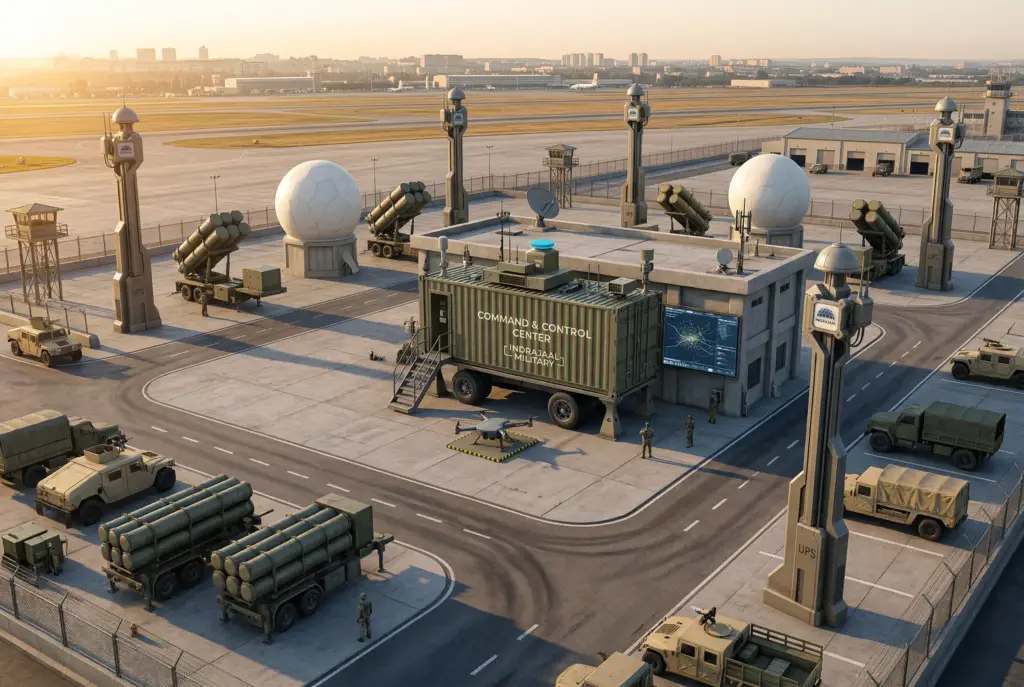
Indrajaal™’s Technology Glossary: 12 Proprietary Modules
At Indrajaal™, we have stitched together 12 proprietary technology modules that can be used separately, or in combination with each other to form an autonomous drone security solution.
Retractor Mitigation
Takes control of a hostile drone and lands it safely in a designated area, a non-destructive mitigation method for confirmed threats.
SkyCop® Surveillance
Drones Level 5 autonomous drone that can monitor threats: The SkyCop™ drone is capable of monitoring, recording, and intercepting drones that pose a potential threat to airspace. Its compact and lightweight design makes it easy to operate and manoeuvre in different environments.
HyperMindTM Computing
AI Computer that can plan and execute missions: This cutting-edge supercomputer can coordinate the movements of multiple drones, allowing them to cover vast areas and provide 360-degree surveillance. In a military context, Hypermind™ Computing can be used to coordinate the movements of drones for reconnaissance missions, target acquisition, and even autonomous aerial combat.
SensorFusion AI
A potent mix of sensing technologies: Designed to detect drones over large areas, this technology is an ideal solution for both urban and military settings. It combines active RF technologies like radar with passive RF technologies such as ESM (Electronic Support Measures) and acoustic sensing technologies to detect a wide variety of drones in almost any environment.
SpiderMesh® Communication Network
High-speed wireless mesh network covering upto 4000 sq. km: With SpiderMesh™, multiple messages can be sent simultaneously, enabling faster communication and increasing the overall network efficiency. It is a robust, reliable, and secure communication solution for a wide range of applications, such as industrial automation, smart cities, and IoT devices.
Brig® IOT Devices
Edge AI smart data and control device: The processor is designed to build intelligence on the edge, which means that it can process and analyze data locally, without the need for cloud connectivity or external processing power. It is not only a data processing and analysis device, but it can also receive commands to execute actions and make decisions autonomously.
Zombee® Mitigation
Level 5 autonomous drones that can kill threats: A fly-and-die specialized drone that is designed to mimic the behaviour of honeybees and protect their hive. These drones are equipped with advanced sensors, weapons, and communication technology that allows them to detect and respond to potential threats quickly and autonomously.
SkyOSTM
Unifies people, process, data and infrastructure related to airspace management: The platform functions as a central system that integrates artificial intelligence and robotics to effectively oversee and maximize resource utilization in Indrajaal™. Through constant data gathering and processing, SkyOSTM makes informed, real-time decisions to optimize resource usage, ensuring they are allocated to where they are most required.
Repulsor® Mitigation
Kicks a drone out of a protected area: Repulsor™ technology operates by emitting a powerful radio signal that interferes with the drone’s navigation system, rendering it unable to operate properly! Additionally, this technology can also use spoofing methodologies to manipulate the drone’s navigation system and direct it to a specific location of choice.
HyperVisionTM Cameras
Uses machine vision to identify threats: This technology can be used as a valuable tool in a wide range of security and surveillance applications due to its ability to recognize and track objects of interest. It enables us to differentiate between drones and other objects, such as birds or other flying objects, with a high degree of accuracy.
WeaponFusionTM AI
Make existing weapons autonomous by integrating them: WeaponFusion™ helps avoid unnecessary redundancy and conserve resources. By connecting weapons and allowing them to communicate and coordinate with one another, the system can optimize its performance and respond to threats with unparalleled efficiency.
GlobalGrid® Interface
Unified real time Command and Control interface: With a GlobalGrid™, system, a commander can quickly gain a comprehensive understanding of the organization’s current situation and assets, as well as track their movements and activities in real-time.
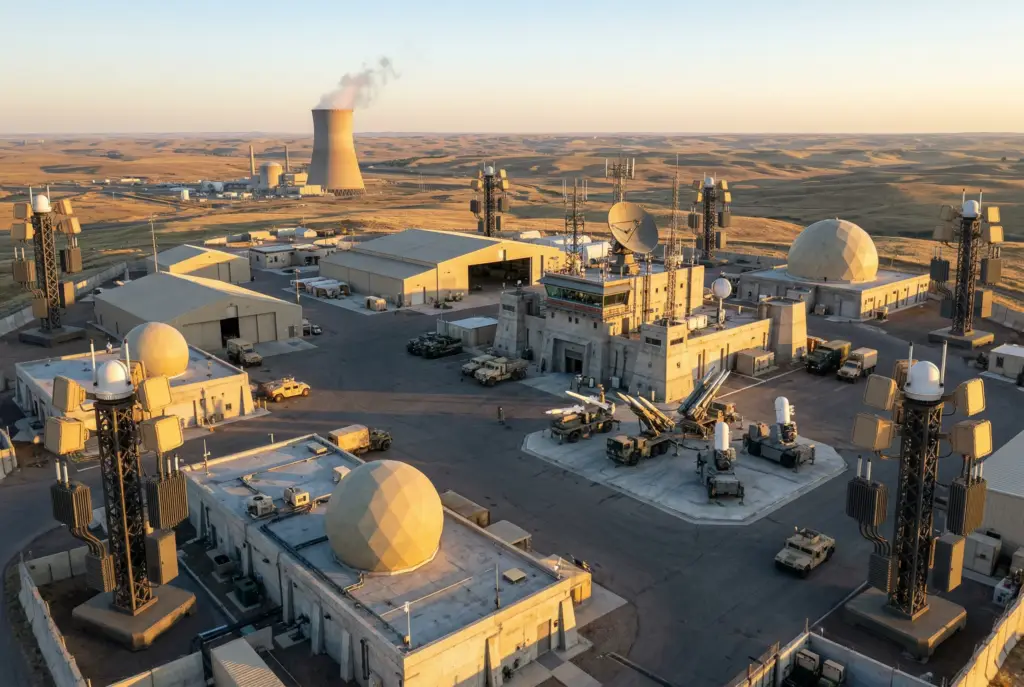
Protecting What Really Matters
As India navigates an evolving drone threat landscape, the case for robust counter-drone technology only grows stronger. From safeguarding border regions and military installations to addressing threats in civilian settings, the requirement for effective detection and neutralization spans the full spectrum of national security.
Investing in indigenous solutions like Indrajaal™ strengthens national security while showcasing India’s own technological capability. Indrajaal™ is built to detect, identify, track, and counter threats across diverse terrains, with the customization needed to address India’s specific and varied security challenges – including seamless integration with local systems, languages, and regulatory frameworks.
Ready to strengthen your defense strategy? Get in touch with Indrajaal’s experts to discuss a solution tailored to your specific requirements.
Frequently Asked Questions
Sensors (radar, RF, acoustic, and optical detection), C4ISR (the command-and-control layer that fuses sensor data into actionable intelligence), and Effectors (jamming, directed-energy, or interception systems that neutralize confirmed threats).
C4ISR stands for Command, Control, Communication, Computer Intelligence, Surveillance, and Reconnaissance — the integrated system that turns raw sensor data into real-time, actionable threat information for operators.
SkyOS™ is Indrajaal’s unifying platform for airspace management, integrating AI and robotics into one central system that continuously processes data to optimize resource allocation in real time across a deployment.
Zombee™ is a Level-5 autonomous “fly-and-die” interceptor drone from Indrajaal’s technology suite, designed to mimic honeybee hive-defense behavior and autonomously detect and neutralize aerial threats.
Indrajaal is built from 12 proprietary technology modules — including Retractor™, SkyCop™, HyperMind™, SensorFusion™, SpiderMesh™, Brig™, Zombee™, SkyOS™, Repulsor™, HyperVision™, WeaponFusion™, and GlobalGrid™ — usable independently or combined into one autonomous system.
Estimates vary by research firm: Fortune Business Insights projects growth from roughly $14.4 billion in 2026 to $55.25 billion by 2034, while MarketsandMarkets forecasts $20.31 billion by 2030 — both reflecting sustained, double-digit annual growth.
Conclusion
Modern warfare has already demonstrated, in real conflicts, what happens when a nation’s counter-drone capability lags behind the threat. Sensors, C4ISR, and effectors have to function as one integrated system — not three separately managed capabilities — to close the gap between detecting a threat and actually neutralizing it. Indrajaal’s twelve-module architecture was built specifically around that principle: technology that can be deployed independently where needed, or fused into a single autonomous defense system where the threat demands it.