

The rapid rise of unmanned aerial systems has transformed surveillance, logistics, and security, while also introducing complex, evolving threats. As drones become smarter, faster, and more autonomous, traditional countermeasures are no longer sufficient. Consequently, this has accelerated the need for autonomous counter unmanned aerial systems that can independently detect, track, assess, and neutralize rogue drones in real time. In this blog, we decode how autonomous aerial security systems work and explore how Indrajaal is redefining counter-drone security through AI-driven intelligence, multi-sensor fusion, and fully autonomous operations.
Table of Contents
- Understanding the Challenge of Unmanned Aerial Systems (UAS)
- The Role of Autonomous Counter-UAS in Modern Security
- What Should Be Counter-UAS Capabilities?
- Sources for Anticipating Threats
- Key Features of the Geospatial C2 System
- Indrajaal ® – 360° Counter-UAS and Drone Defense System
- Challenges in Developing Indrajaal and How They Were Overcome
- Conclusion
Understanding the Challenge of Unmanned Aerial Systems (UAS)
Unmanned aerial systems (UAS) present significant challenges and potential risks in today’s technologically advanced world. These devices, used for surveillance, delivery, or recreation, can invade privacy, compromise security, and disrupt critical infrastructure.
The evolving UAS technology enables long-distance flights and payload delivery, raising concerns about potential misuse by malicious individuals or groups. Addressing the growing threats posed by UAS requires a multi-faceted approach that encompasses advanced technological solutions.
The Role of Autonomous Counter-UAS in Modern Security
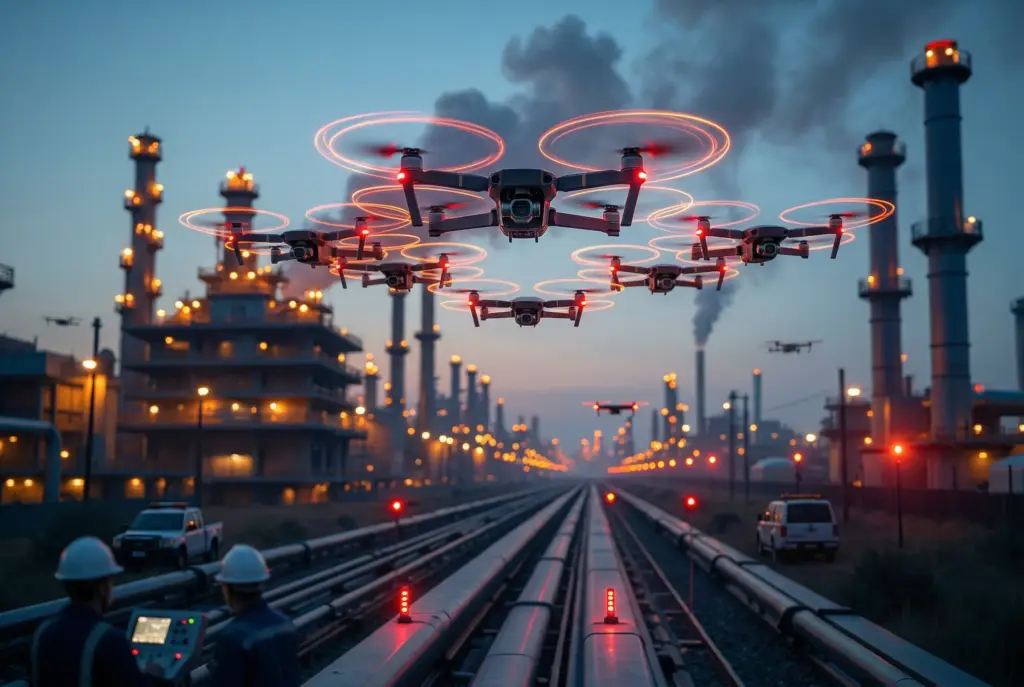
Amid evolving UAS threats, there is a pressing need to develop and implement autonomous Counter-Unmanned Aerial Systems (C-UAS).
These autonomous systems play a vital role in safeguarding critical infrastructure, public events, and military operations from potential security breaches or attacks initiated by rogue drones. Moreover, by utilizing cutting-edge technology such as AI and sensors, autonomous C-UAS can effectively detect, track, and neutralize unauthorized drones swiftly and with precision.
As a result, this proactive approach ensures a rapid response to potential threats, helping to mitigate risks and enhance overall security measures. Furthermore, as the UAS technology continues to advance, the importance of autonomous C-UAS becomes increasingly evident in maintaining a safe and secure environment for various applications.
For deeper insights, Read: Counter Drone Systems: Comprehensive Guide [2026]
What Should Be Counter-UAS Capabilities?
Detection of UAS
Detecting and monitoring drones is a vital aspect of modern security operations. To begin with, counter-UAS systems are specifically designed to alert operators when a drone enters a designated warning zone. These detection systems can be either fixed-site or portable, depending on operational requirements. In addition, they utilize a range of detection technologies such as radar, optical sensors, and acoustics to effectively identify incoming drones.
Tracking UAS
Once a drone is detected, a counter-UAS system can track its flight path and locate the pilot. This provides valuable airspace situational awareness to the operator, enabling timely and appropriate responses to the drone presence.
Identification of UAS
With the surge in drone usage across various industries, it is essential to accurately identify drones operating within a specific area. Following detection, the operator can classify the drone as either friendly or hostile, allowing authorized drones to continue their operations uninterrupted by the counter-UAS system.
Furthermore, the system is able to detect the model of the drone, providing security personnel with valuable information on the drone’s range, speed, and payload capabilities within their airspace.
Addressing UAS Threats
Finally, to combat unauthorized drones, mitigation technologies can be utilized. For instance, interference signals can disrupt the drone’s operations, while active countermeasures such as jamming devices, missile interception systems, and high-power lasers can deter or disable drones and their operators.
Sources for Anticipating Threats
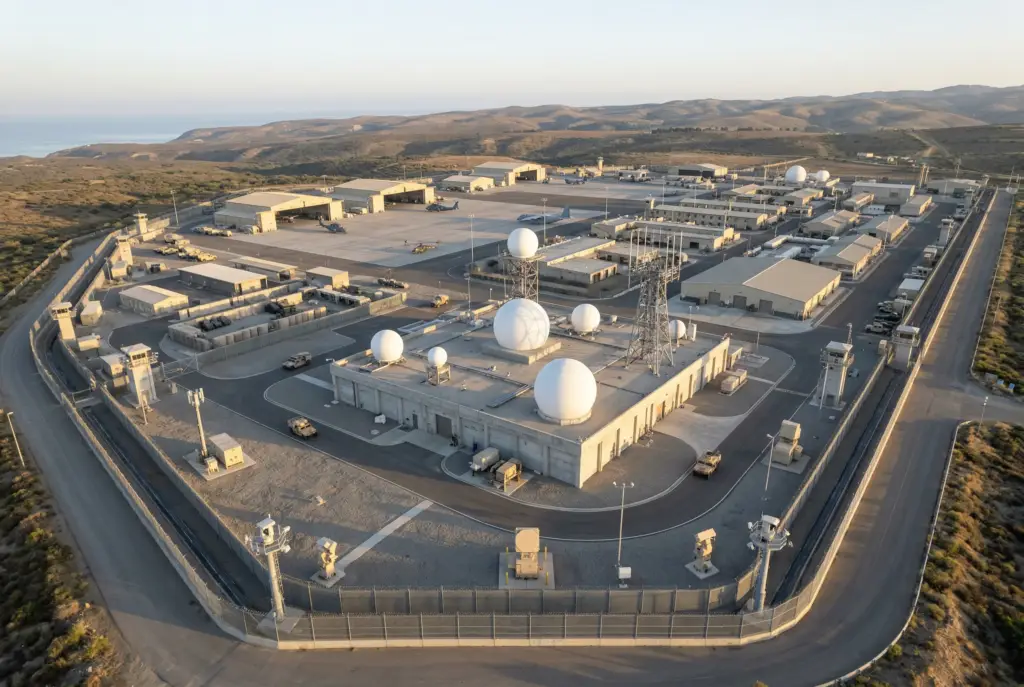
In order to effectively anticipate and respond to threats from drones, a geospatial command and control (C2) system relies on a variety of data sources that provide essential information about the airspace. Some of the key data sources utilized within the C2 system include radio frequency sensors, radar sensors, and video data.
Radio Frequency Sensors
Radio frequency (RF) sensors are a critical data source in the geospatial C2 system. These sensors examine the electromagnetic spectrum to identify and categorize drone signals. By monitoring the RF spectrum, the C2 system can pinpoint drones based on their unique radio frequency signatures and analyze their communication patterns.
Data obtained from RF sensors offers valuable insights into the presence, behavior, and intentions of drones, aiding in the early detection and assessment of potential threats.
Radar Sensors in the Geospatial C2 System
Radar sensors play a crucial role in the geospatial C2 system by providing comprehensive airspace surveillance. These sensors emit radio waves and analyze the echoes reflected back from objects, including drones. Equipped with intelligent features, radar sensors can distinguish between suspected drones and other objects, such as birds.
By accurately determining the position, velocity, and altitude of drones, radar sensors enable real-time monitoring, tracking, and situational awareness. The integration of radar data enhances the C2 system’s ability to effectively detect, track, and respond to drone threats.
Key Features of the Geospatial C2 System
Detection and Identification
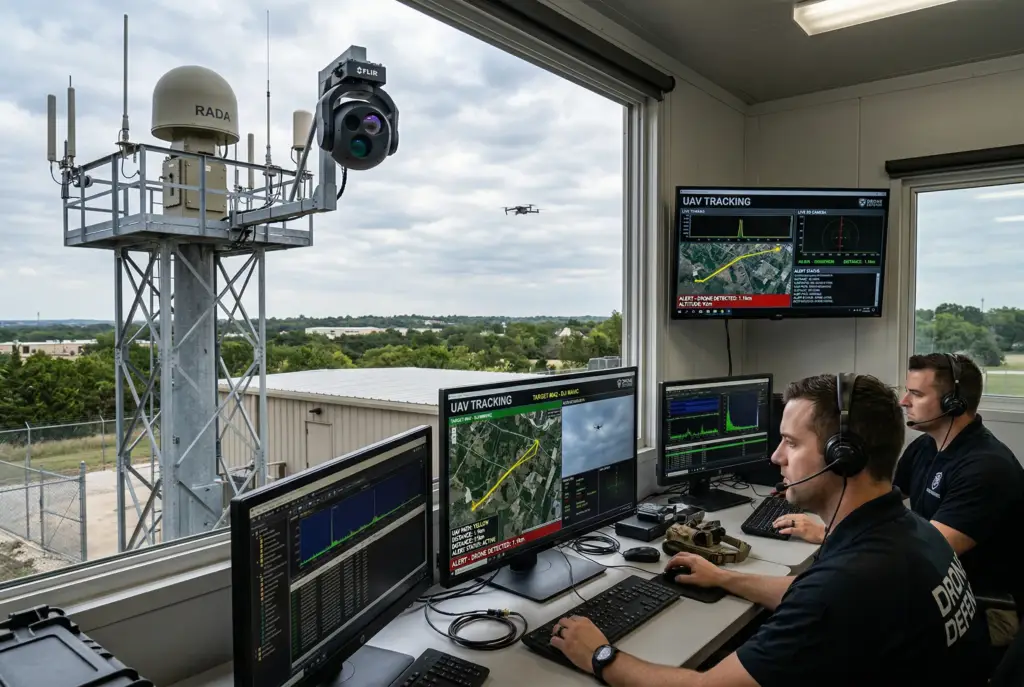
The C2 system utilizes a combination of data sources to detect and identify drones. By analyzing RF signatures, radar returns, and video feeds, the system can differentiate drones from other objects in the airspace based on their presence and characteristics.
Tracking and Monitoring
Upon detecting and identifying drones, the C2 system employs tracking algorithms to monitor their movements accurately. This capability allows operators to maintain real-time situational awareness, track drone positions, and anticipate their trajectories.
Threat Evaluation and Categorization
The C2 system employs sophisticated algorithms and analytics to evaluate the characteristics and seriousness of potential drone threats. By examining data from various sources such as RF signals, radar readings, and video recordings, the system can categorize drones based on their actions and intentions, assigning a corresponding risk level.
Decision-Making Support and Response
Drawing upon the threat assessment, the C2 system equips operators with decision-making tools to assist them in determining the most appropriate response tactics. This includes issuing alerts, presenting visualizations, and suggesting countermeasures to effectively mitigate the identified threats.
Integration of Countermeasures
The geospatial C2 system streamlines the incorporation and synchronization of countermeasures to neutralize drone threats. Organizations should employ counter-UAS technologies, implement response procedures, and collaborate with relevant security forces for a prompt and efficient reaction.
Indrajaal® – 360° Counter-UAS and Drone Defense System
Indrajaal came into existence in 2020 after 15 years of extensive research and development in autonomous aerial security systems. The team behind Indrajaal possesses a wealth of expertise in radar technology and airspace management spanning three decades.
Indrajaal stands as the world’s sole counter unmanned aerial system (C-UAS) capable of autonomously safeguarding against drones of all classifications. The system integrates 12 modules of cutting-edge technology, including the patented HyperSensingTM and WeaponFusionTM technologies. This seamless integration delivers a unified and supremely efficient autonomous drone security system.
Unlike traditional systems that rely on one type of sensor, Indrajaal consolidates data from multiple sources such as radar, cameras, and other sensors. Powered by advanced AI algorithms, this technology analyzes real-time data to accurately differentiate between authorized and unauthorized aerial systems.

Unique Differentiators
- Most counter-drone systems developed and being marketed across the world are stand-alone, piecemeal or man-operated systems. Indrajaal is a single autonomous system that has the ability for multi-spectral illumination and autonomous operations with a central command and control center.
- Indrajaal is the 360-degree Drone Defense System. A decentralized, mobile and AI-enabled implementation can be accomplished with a combination of a wide-array of sensors and technologies connected to the Command & Control Centre through a fully secured mesh. Modular deployment, well-defined connectivity, efficient process flows and use of Artificial Intelligence-driven algorithms are central to this solution.
- Unlike peer systems, Indrajaal doesn’t just detect — it reacts intelligently. Utilizing real-time tracking and trajectory prediction, it provides security personnel with precise data on drone locations and possible future paths. This actionable intelligence allows for the deployment of various countermeasures like jamming devices, spoofing devices, and kamikaze drones, all orchestrated in an integrated manner for effective neutralization of threats.
Challenges in Developing Indrajaal and How They Were Overcome
Indrajaal was developed to address a complex three-dimensional challenge involving drone size, terrain, and local regulations that vary by deployment. As a result, the solution needed to be adaptable, cost-effective, and both comprehensive and customizable.
To overcome this, a LEGO-block design approach was adopted, modularizing the system into flexible components. This enabled real-time configuration across diverse environments and regulatory frameworks, ensuring operational efficiency and successful real-world deployment.
Conclusion
As drone threats continue to grow in scale and sophistication, security can no longer depend on manual or fragmented counter-drone solutions. Instead, autonomous counter-unmanned aerial systems represent the future of airspace defense, offering speed, precision, and continuous protection without human dependency.
By integrating advanced sensors, AI-powered analytics, and intelligent response mechanisms, platforms like Indrajaal provide true 360-degree aerial security. Ultimately, in an era of congested and contested skies, autonomous counter-drone systems are not just an upgrade—they are a strategic necessity.