

This guide covers everything decision-makers need to understand about counter-unmanned aerial systems (C-UAS). It explains the emerging drone threats driving demand, the key market and technology trends (including AI/ML detection and advanced electronic warfare), why autonomous systems now outperform piecemeal ones, and a practical six-step framework for deploying C-UAS effectively, from risk assessment through post-action review.
“A counter-unmanned aerial system (C-UAS) is an integrated platform that detects, tracks, identifies, and neutralizes unauthorized drones. Modern C-UAS combines layered sensors (radar, RF, EO/IR, acoustic) with mitigation tools (jamming, spoofing, cyber takeover, kinetic interception), and increasingly runs autonomously, moving from detection to defeat in seconds rather than minutes.”
Key takeaways
- The global counter-UAS (C-UAS) market is projected to reach roughly $14.4–20.3 billion by 2026–2030 depending on methodology, growing at a CAGR of 22–25%, driven by rising drone incursions at borders, airports, and critical infrastructure.
- AI-powered C-UAS is the fastest-growing technology layer in the market, as detection shifts from single-sensor jammers to fused radar, RF, and EO/IR platforms with machine-learning classification.
- Deployment is a six-stage process — risk assessment, technology selection, SOPs, training, inter-agency collaboration, and post-action review — not a one-time hardware purchase.
- Fully integrated, autonomous platforms consistently outperform piecemeal detection-only or jamming-only systems against modern threats like drone swarms and low-RCS loitering munitions.
The rise of drones in civilian and military contexts brings significant security challenges and an urgent need for advanced countermeasures. This guide explores why robust Counter-Unmanned Aerial Systems (C-UAS) are essential today, covering emerging threats like drone smuggling and warfare, key trends in detection technology (such as AI/ML integration and advanced jamming techniques), and best practices for deploying these systems.
Table of Contents
- Emerging Drone Threats
- Why C-UAS Demand Is Accelerating
- Key Trends in the C-UAS Market
- Why Deploy Autonomous Counter-Drone Technology?
- The C-UAS Deployment Playbook: A 6-Step Framework for Decision-Makers
- Case in Point: Indrajaal — 360-Degree Autonomous Aerial Security
- Frequently Asked Questions
- Conclusion
Emerging Drone Threats
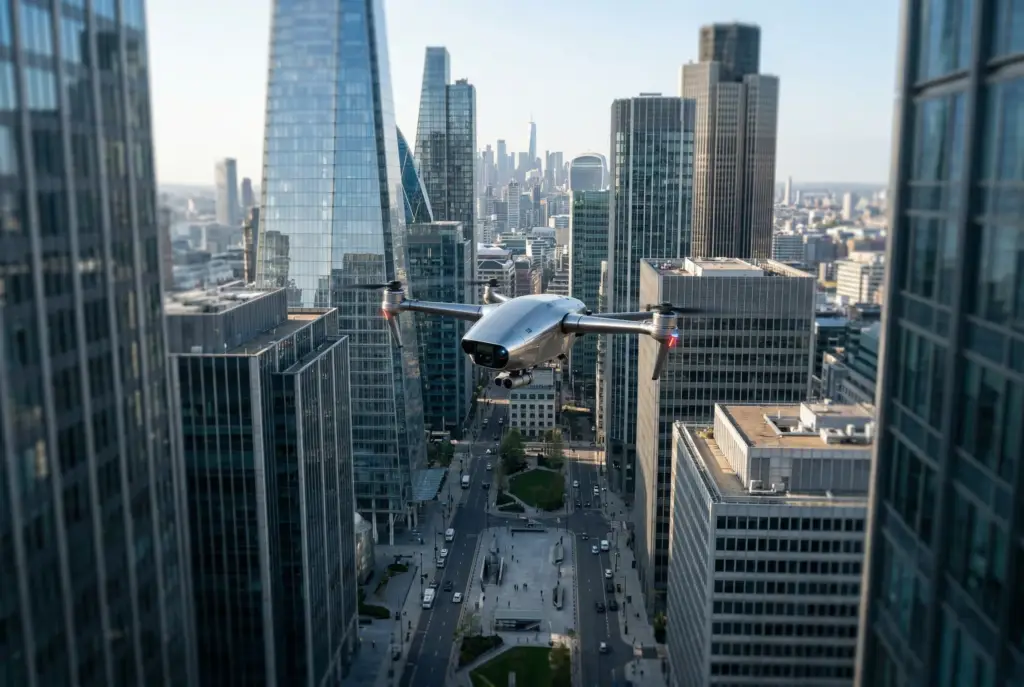
The drones of the future are already here and they’re transforming both civilian life and modern conflict. Alongside the productivity gains, drones now carry a growing set of security risks: unauthorized surveillance, cross-border smuggling, corporate espionage, and, increasingly, weaponization.
Cheap, fast, and difficult-to-detect drones can be fitted with explosives. The Russia-Ukraine war and recent Middle East conflicts have both demonstrated how drones are reshaping the nature of warfare in real time. Smart drones, coordinated drone swarms, and low radar-cross-section (low-RCS) loitering munitions are becoming standard tools of both state and non-state actors.
Related reading: Safeguarding critical infrastructure against drone threats
Why C-UAS Demand Is Accelerating
That’s why companies and military organizations today need deep-tech defense partners with the adaptability and expertise to solve these challenges. In this blog, we give a complete guide to everything you need to know while choosing counter-unmanned aerial systems (C-UAS). First, let’s look at why C-UAS systems are in growing demand.
Automation is Advancing Rapidly
Thanks to the confluence of robotics and AI, drones can now perform tasks of previously unheard-of complexity. As a result, AI-enabled drones are being deployed in fields like package delivery, search and rescue, surveillance, and agriculture. In doing so, these sophisticated aerial vehicles easily navigate complex environments, using state-of-the-art algorithms to make decisions in real time and gather critical data. However, the same drones that benefit our lives can turn deadly when they fall into the wrong hands.
Existing Security Measures are Inadequate Against Drone Threats
Recent drone attacks in Ukraine, Russia, India, and Saudi Arabia have demonstrated that traditional security measures often fail against drone threats. Drones are small, agile, and fly at low altitudes, making them difficult to detect with legacy radar or conventional defense systems. Systems built for larger aircraft and missiles cannot effectively counter smart drones, swarms, or stealthy missiles, underscoring the need for specialized counter-unmanned aerial systems C-UAS technology.
Drone Usage is Growing Exponentially
Drone adoption keeps climbing. In the U.S. alone, roughly a million drones are registered with the Federal Aviation Administration, and that number continues to rise. In India, over 13,000 drones were registered in 2023 alone, part of a broader multi-year growth trend across South Asia’s civil and commercial drone sectors.
With this many UAVs sharing the sky, efficient detection and control is no longer optional. Counter-UAS technology — once the domain of defense forces almost exclusively — is now deployed across critical infrastructure worldwide. Market estimates vary by research firm, but the direction is consistent: Fortune Business Insights projects the global counter-UAS market growing from roughly $14.4 billion in 2026 to $55.25 billion by 2034, a 22.4% CAGR, while MarketsandMarkets forecasts the market reaching $20.31 billion by 2030 from $6.64 billion in 2025, a 25.1% CAGR — with AI-powered C-UAS specifically identified as the fastest-growing technology segment in that forecast.
Key Trends in the C-UAS Market
Integration of AI and ML for Enhanced Detection
AI and machine learning are changing how drones are detected. These tools study data from sensors such as radar, cameras, and RF signals.
They help systems spot unusual activity, identify drone patterns, and even predict risky behavior. Over time, machine learning models learn from new data and become more accurate.
Modern C-UAS platforms also combine data from multiple sensors. They bring together radar, vision, and RF inputs into one view. This allows faster and more dependable threat detection than older systems.
Advancements in Jamming and Electronic Warfare Technologies
New C-UAS systems feature sophisticated electronic warfare capabilities. Advanced signal processing allows them to detect and jam drone control and navigation links. Techniques like GNSS spoofing can hijack a drone’s GPS. Meanwhile, directed-energy weapons – including lasers and high-power microwaves – offer non-kinetic ways to disable drones without collateral damage. These tools continually evolve to counter emerging drone tactics like swarming and stealth approaches.
Growing Interest in Counter-Drone Measures
Organizations across sectors now recognize the need for drone countermeasures. Airports, stadiums, oil & gas facilities, and military bases are investing in C-UAS to protect people and assets. This widespread adoption reflects a growing awareness of UAV risks. As threats mount, integrated systems combining detection and neutralization (e.g. jamming or kinetic interception) are becoming the standard.
Drone Detection and Disruption Systems Dominate the Market
The market is shifting toward unified detect-and-counter platforms. State-of-the-art C-UAS uses multi-sensor networks — radar, RF scanners, acoustic sensors, and cameras — to achieve real-time situational awareness. Once a rogue UAV is identified, these systems rapidly deploy countermeasures: from RF jamming and GPS spoofing to physical interceptors like nets or projectiles. By seamlessly linking detection with disruption, modern solutions ensure unauthorized drones are intercepted before reaching protected assets.
Why Deploy Autonomous Counter-Drone Technology?
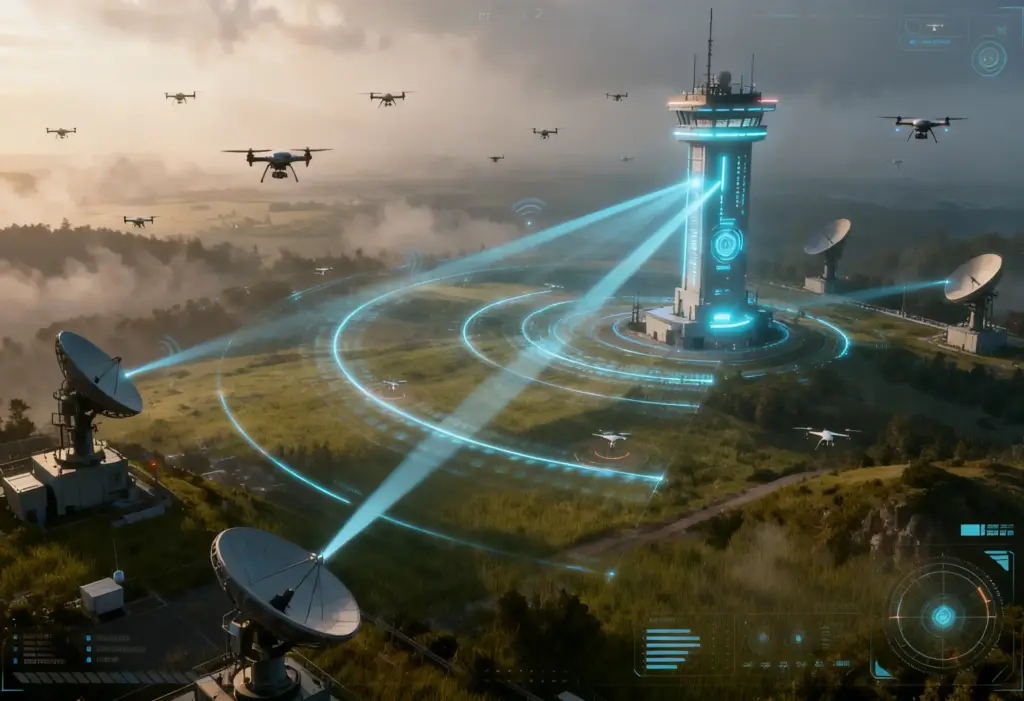
To counter contemporary threats like drone swarms and low-RCS loitering munitions, autonomous drone security technology has become essential rather than optional. By integrating artificial intelligence, an anti-drone system functions as a cohesive, independent architecture in which sensors, analytics, and effectors operate as one system rather than a set of disconnected tools.
Autonomous, AI-powered C-UAS platforms, including Indrajaal — apply a multi-layered approach built on three core capabilities:
- Wide Area Detection: Radar, RF scanners, acoustic arrays, and cameras form the first line of defense, sweeping the airspace to spot incoming UAVs early.
- Threat Identification: Detected drones are analyzed to identify make, model, and where possible, operator. Signal fingerprinting and onboard metadata reveal whether a drone is unauthorized or benign — accurate identification is what keeps false alarms from overwhelming operators.
- Neutralizing Unauthorized Drones: Once classified as hostile, drones are disabled. Non-kinetic methods like signal jamming or GPS spoofing take them offline without collateral damage; kinetic options — directed-energy lasers, high-power microwaves, interceptor drones, or nets — physically neutralize confirmed threats when required.
Piecemeal systems consistently fall short against modern swarms or stealthy drones. Fully integrated platforms that automatically chain detection, tracking, and countermeasures into one cohesive response are what separate credible C-UAS deployments from a collection of point products.
Piecemeal systems are not enough against modern swarms or stealthy drones. Instead, fully integrated platforms automatically chain detection, tracking, and countermeasures into a cohesive response.
The C-UAS Deployment Playbook: A 6-Step Framework for Decision-Makers
Implementing an effective C-UAS strategy involves:
- Risk Assessment: Identify the specific vulnerabilities of your facility, site, or region. A thorough risk analysis determines where sensors and defenses should be prioritized — a border post, an airport perimeter, and a data center all have very different threat profiles.
- Choosing the Right Technology: Work with C-UAS experts to select components (radar, RF, cameras, jammers, etc.) that fit your needs. Consider range, precision, and integration with existing security systems.
- Standard Operating Procedures: Develop clear SOPs for detected drone threats. Define steps for evaluating severity, issuing alerts, and deciding actions (e.g. when to jam, pursue, or shoot down a drone).
- Training and Preparedness: Even with autonomous systems, trained personnel are essential. Train teams on the C-UAS equipment and response plan. Conduct drills to ensure rapid and correct reactions. Update training as the technology evolves.
- Collaboration: Coordinate with law enforcement, government agencies, and neighboring sites. Sharing data and joint exercises can improve detection and prosecution of malicious drone operators.
- Post-Action Review: After any incident, analyze your response. Identify what worked well and what could improve. Refine your technology setup and protocols based on lessons learned.
Case in Point: Indrajaal — 360-Degree Autonomous Aerial Security
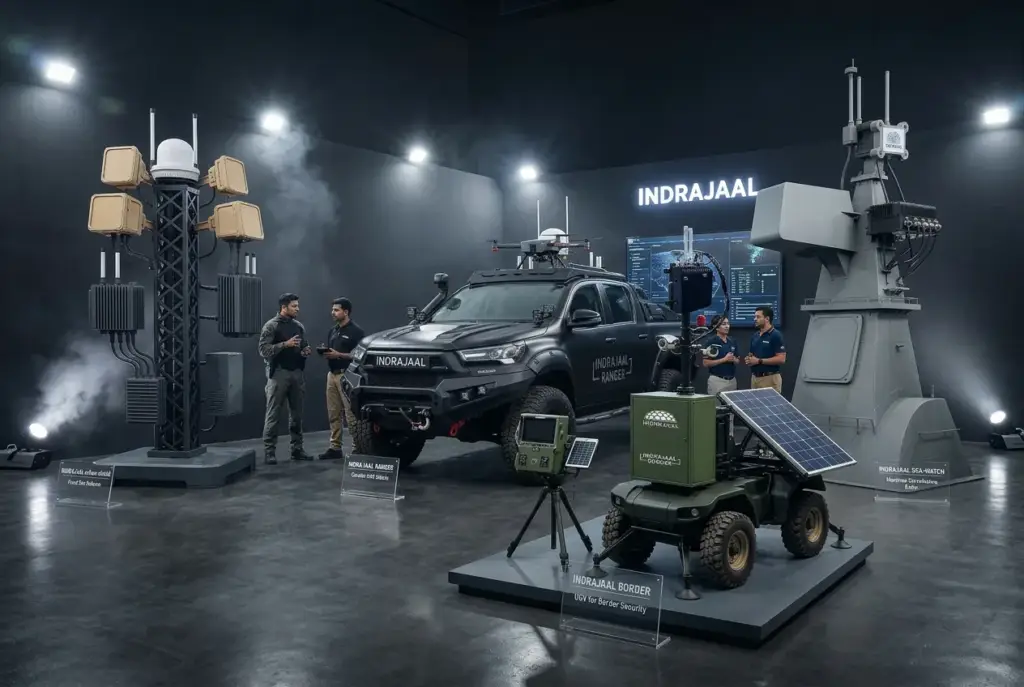
Indrajaal (the name being derived from Indra’s net in Vedic mythology), is at the forefront of anti-drone defence and has earned the 9th position globally among top C-UAS systems. The “Iron Dome“ for drones is built with 12 technology modules with a holistic approach, excelling in detecting, identifying, tracking, and countering threats across diverse terrains.
Talk to our experts today and learn how Indrajaal’s platform offers unparalleled customization, considering factors like local languages, regulations, and seamless integration with military and civilian systems that ensure optimal performance and compatibility with existing infrastructures.
Strength respects strength; the weak are either subjugated or destroyed.
Ready to deploy next-generation air defense? Talk to Indrajaal’s experts about a C-UAS strategy built around your specific risk profile.
Frequently Asked Questions
What is the difference between C-UAS and traditional air defense?
Traditional air defense is built to intercept large aircraft or missiles at altitude. C-UAS is purpose-engineered for small, slow, low-flying drones — including nano and micro UAVs — that legacy radar and conventional systems were never designed to detect or classify.
How long does it take to deploy a counter-UAS system?
Timelines vary by site complexity, but a structured deployment typically follows six phases — risk assessment, technology selection, SOP development, training, inter-agency coordination, and post-action review — rather than a single installation event. Fixed-site deployments can be operational in weeks; large-area or border-scale deployments take longer due to sensor network buildout.
Why is AI important in modern counter-drone systems?
AI enables real-time fusion of radar, RF, and camera data to classify threats, reduce false positives, and compress response time from minutes to seconds. It’s currently the fastest-growing technology segment in the C-UAS market, according to MarketsandMarkets’ 2025–2030 forecast.
Can a single sensor type (e.g., just RF jamming) provide adequate drone defense?
No — single-sensor or single-method systems consistently underperform against modern threats like drone swarms, stealthy low-RCS drones, or drones using non-standard control links (e.g., fiber-optic control, which defeats RF jamming entirely). Layered, multi-sensor, multi-effector platforms are now the market standard.
What sectors are adopting counter-UAS technology beyond defense?
Airports, stadiums, oil & gas facilities, ports, data centers, and public event organizers are all expanding C-UAS adoption, reflecting a shift from a purely military use case to broad critical-infrastructure and public-safety application.
Conclusion
The counter-UAS market isn’t just growing, it’s structurally shifting, from single-purpose jammers and detectors toward integrated, AI-native, autonomous platforms capable of handling swarms and evolving threat tactics. For decision-makers, the strategic question has moved from “do we need a C-UAS system” to “do we have the right deployment framework, technology stack, and operational discipline to make it effective.”
Organizations that treat C-UAS deployment as a structured, six-stage process, not a one-time hardware purchase – are the ones building airspace defense that actually holds up under real-world conditions.