

Border security has entered a new era. What was once defended by watchtowers, fences, and foot patrols is now increasingly challenged by silent, low-flying drones carrying drugs, weapons, and fear. As a result, smugglers exploit speed, automation, and invisibility, turning India’s borders—particularly in Punjab— into testing grounds for a new kind of threat that traditional defences can no longer stop alone.
Table of contents
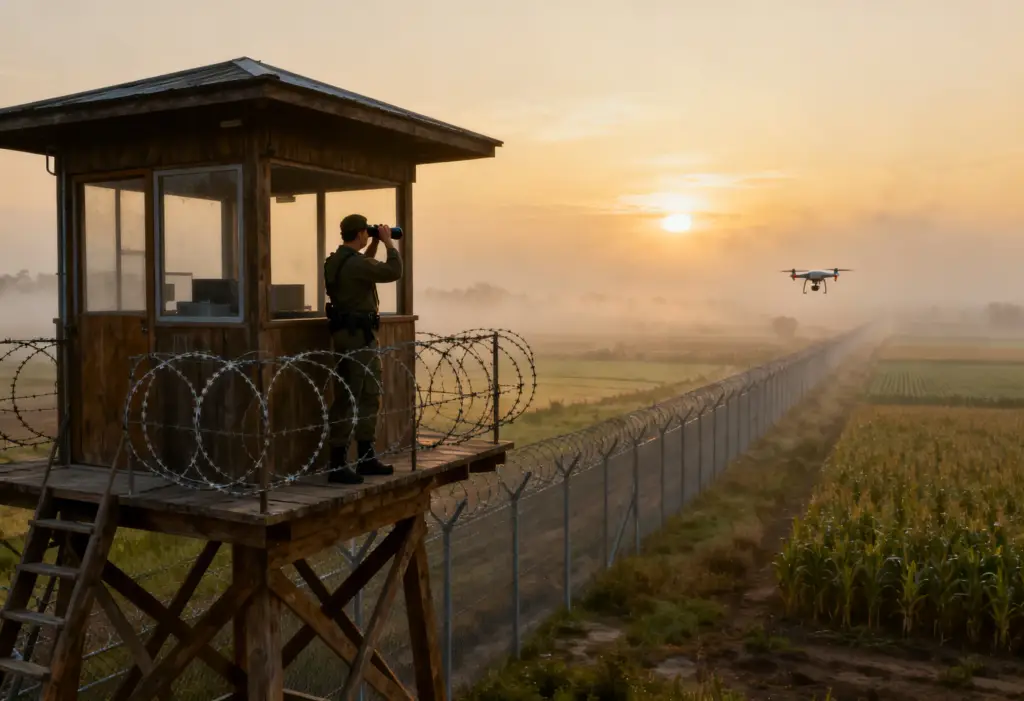
The border used to be simple: a guard tower, a fence, a soldier scanning the horizon.
But today, that horizon has changed, and so has the nature of the threat. Smugglers no longer need to trudge across no-man’s land. They launch drones.
The Invisible Invasion
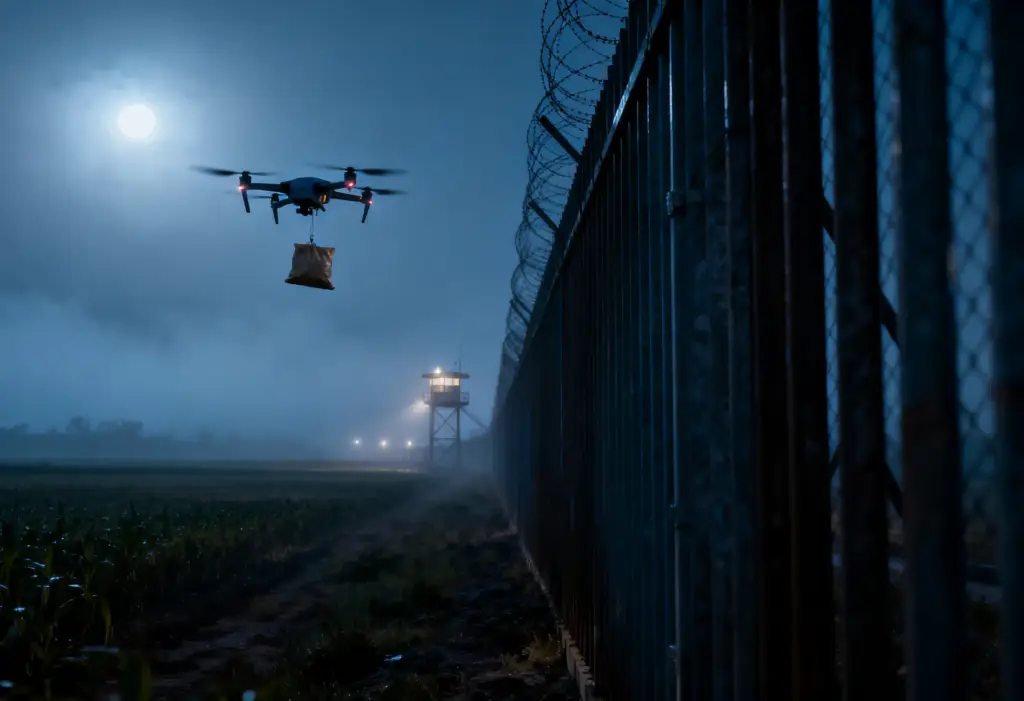
Recently, the Border Security Force reported over 260 drone interceptions along the Punjab–Pakistan border. These aren’t just hobby drones; operators modify many to drop payloads deep into Indian territory. According to the Narcotics Control Bureau, authorities recorded 179 cases of drone-based drug smuggling in 2024, a major jump from just 3 in 2021.
What once took weeks or required human couriers now takes minutes, and the goods are changing too. Operators use drones to transport heroin, synthetic drugs, and even weapons, exploiting modern technology to bypass traditional border defences.
Smuggling’s New Ground Zero: Punjab & Beyond
Punjab, a small state of just 2.3% of India’s population, accounted for a staggering 44.5% of the country’s heroin seizures in 2024, according to official NCB data. This makes it a critical frontline in the fight against drug trafficking.
This year, too, the numbers are alarming. BSF Punjab Frontier officials told the Times of India that an average of 24 drones were seized along the Punjab border every month this year. These drones were carrying heroin, opium, weapons, ammunition, and even explosives. More than 250 Indian nationals have been apprehended in these cases. These deadly networks are not just trafficking drugs or arms; they’re fueling crime and insecurity across communities.
The Human Cost: Children, Families & Fear
The toll of this evolving smuggling threat often shatters lives — especially among young people. Punjab’s addiction crisis isn’t new, but the scale is becoming harder to ignore. Over the past year, authorities filed thousands of drug-related FIRs as part of Punjab’s “War on Drugs” campaign, and law enforcement agencies apprehended more than 30,000 people for drug smuggling-related offences.
Behind each data point lies a face, a family, a fragile future. When drones drop narcotics, they disrupt lives, not just borders.
When Technology Becomes the Defense
The frontline of defense is no longer a watchtower: it’s a digital grid, powered by AI and autonomous systems. Modern counter‑drone solutions combine radar detection, signal analysis, and automated engagement to detect, track, and neutralize rogue UAVs — even the low‑signature ones. These systems operate around the clock, unaffected by human fatigue, and are deployed precisely where intrusion risk is highest.
In terrain like dense forests, high mountains, and riverine areas, human patrols can be slow and limited. AI, however, never stops watching. They analyze patterns, detect anomalies, and coordinate responses before a threat becomes reality.
A New Strategy, A Clear Purpose
Today, border defense is about integration. Intelligence, technology, and rapid response must work in harmony to keep up with evolving threats. Autonomous airspace control isn’t a luxury: it’s a necessity. Only with advanced systems in place can we catch flight paths, neutralize illicit drones, and ensure that payloads of destruction don’t reach the ground.
Every drone that slips past undetected is more than a security failure — it’s a potential tragedy. Such incidents can disrupt families through addiction, expose communities to violence, and put an entire generation at risk.
These are not futuristic threats. They’re happening now, in our fields, in our villages, and above our heads. As smugglers grow smarter, so must our defense.
True victory is not just securing the border… It’s saving lives.
Conclusion
When threats move at machine speed, defence must respond the same way. Consequently, drone-enabled smuggling has transformed border crime into a high-tech operation with devastating human consequences. Therefore, the future of border security lies in autonomous, AI-driven systems that can detect, decide, and neutralise threats before they reach the ground. In this context, platforms like Indrajaal represent a decisive shift—from reactive guarding to proactive protection. Ultimately, securing borders today is not just about territory, but about saving lives and futures.