

Table of contents
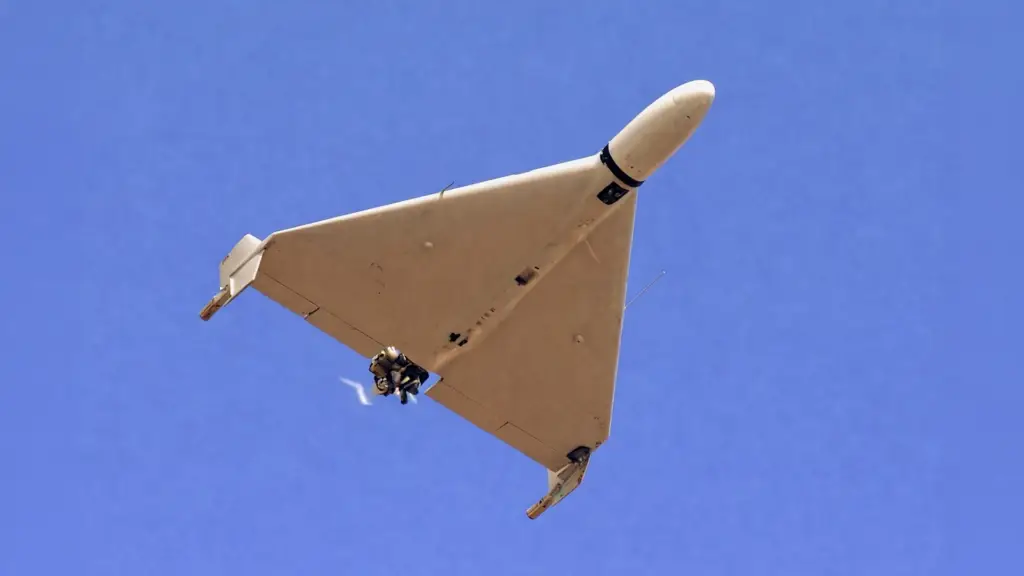
The recent escalation between Iran and Israel, with the United States drawn in diplomatically and militarily, has once again brought drones to the centre of modern warfare. But what stands out this time is not just the scale of the exchanges. It is the economics of it.
For years, air power was defined by advanced fighter jets, precision guided munitions and layered missile defence systems that only a handful of nations could afford. Today, relatively inexpensive drones and loitering munitions are forcing even the most sophisticated militaries to rethink assumptions.
As someone building air defence solutions in India, I see this shift as more than a regional conflict. It is a structural change in how wars are fought and how nations must defend themselves.
The Power of Cheap Scale
Iran’s use of one way attack drones, including variants of the Shahed series, has demonstrated a simple but powerful principle. You do not always need the most advanced system to create strategic pressure. You need enough systems, deployed intelligently.
These drones are not technologically revolutionary. They are slow, relatively noisy, and not especially precise compared to cruise missiles. Yet when launched in large numbers, they complicate air defence planning. They stretch radar coverage, exhaust interceptor stocks, and force defenders to make cost heavy decisions.
This is the new equation. A drone that costs a fraction of a missile can compel the defender to launch an interceptor worth many times more. Even if most drones are shot down, the economic asymmetry works in the attacker’s favour.
Israel’s multi layered defence network has shown impressive interception rates. But the very need to repeatedly activate systems such as Iron Dome and David’s Sling underlines a deeper reality. Saturation is now a weapon.
The Blurring of State and Proxy Warfare
Another feature of this conflict is the diffusion of drone capability across state and non state actors. The same design philosophies seen in Iranian systems have surfaced in other theatres, from Eastern Europe to West Asia.
Drones are portable. They are adaptable. They are deniable. This makes them ideal tools in grey zone conflict. They allow states to project power indirectly while maintaining ambiguity.
For the United States, the lesson is not only about defending allies like Israel. It is about preparing for a future where low cost unmanned systems can threaten forward bases, logistics hubs and even homeland infrastructure.
We saw early warnings of this in attacks on energy infrastructure in the Gulf a few years ago. The technology has only matured since then.
Air Defence Can No Longer Be Reactive
Traditional air defence was built around high value threats such as fighter aircraft and ballistic missiles. Drones disrupt that hierarchy. They fly low, slow and sometimes in swarms. They can approach from unconventional directions. They can use commercial components.
This requires a layered, networked and automated response. Detection must move beyond conventional radar. Electro optical systems, passive sensors, radio frequency detection and AI driven analytics must work together. The goal is not simply to intercept but to identify and classify early.
Equally important is the cost curve. If defence remains more expensive than attack, the defender will always be under strain. Directed energy systems, electronic warfare and soft kill options must complement kinetic interceptors.
In the India context, this is not theoretical. We have already seen cross border drone activity targeting both military and civilian areas. Critical infrastructure such as airports, refineries and command centres are exposed if protection remains limited to perimeter security.
From Vulnerability to Preparedness
India cannot afford to wait for a large scale drone incident to act decisively. The global trend is clear. Drones are not an auxiliary capability. They are central to modern conflict.
The solution lies in creating integrated counter drone grids around high value assets. Not isolated installations, but connected networks that can share threat data in real time. Urban air mobility will further complicate airspace management in the coming years. Civil and military authorities must coordinate closely.
The ongoing Iran Israel confrontation shows how quickly escalation can occur when unmanned systems are involved. A swarm launched hundreds of kilometres away can trigger air raid sirens in minutes. That compresses decision cycles. It raises the risk of miscalculation.
The Strategic Takeaway
The most important lesson from the current crisis is this. Superiority is no longer defined only by having the most advanced platforms. It is defined by resilience.
Can your systems absorb saturation. Can they operate continuously. Can they defend not just borders but cities, power grids and data centres.
The drone age has democratised air power. That is unlikely to reverse. For countries like India, this is both a warning and an opportunity. We can build indigenous solutions that are scalable and cost effective. We can design systems for our threat environment rather than importing doctrines shaped by other geographies.
The Iran Israel conflict is not just a regional flashpoint. It is a preview of the next decade of warfare.
If we read it carefully, the message is clear. Defence planning must move from platform centric thinking to ecosystem thinking. In a world of cheap but countless drones, vigilance is no longer optional. It is foundational.