A drone does not need to be large, heavily armed or particularly sophisticated to create a serious security problem.
Sometimes, the hardest part is not spotting it.
It is working out what it is doing, how much risk it poses and what to do next.
On 4 August 2026, police discovered a small drone carrying explosives beside a Ukrainian cargo aircraft at Leipzig/Halle Airport in Germany. On 1 September, German authorities attributed the attempted attack to Russia. The target was not a front line, but a civilian freight hub.
The incident brought a difficult security question into focus: how do you protect a critical facility when a relatively small aircraft can create a major disruption before its intent is fully understood?
The challenge extends well beyond airports. Drones are being used for surveillance, cross-border smuggling, operational disruption and attacks on military and civilian assets. In India, the Border Security Force’s Punjab Frontier reported seizing 272 drones between January and November 2025, alongside significant quantities of narcotics, explosives and weapons.
For organisations responsible for airports, borders, industrial facilities and other critical infrastructure, the question today is whether the site can detect, assess and respond to that threat in time.
This guide examines the changing drone threat landscape, the technologies used to counter it and the steps security teams can take to improve preparedness.
Table of contents
- What Are Drone Threats?
- Why Drone Threats Changed in 2025 and 2026
- Five Types of Drone Threats Security Teams Face
- Why Drones Are Hard to Detect and Stop
- How Counter Drone Technology Works
- Why Command & Control Matter?
- Who Needs a Counter Drone System?
- Rules of the Sky: Who Can Act Against a Drone in India?
- A Five-Step Drone Threat Readiness Plan
- Frequently Asked Questions
- Conclusion: Drone Threats Reward the Prepared
What Are Drone Threats?
Drone threats are risks arising when an unmanned aircraft system (UAS) is used deliberately, or operated carelessly, in a way that endangers people, disrupts operations, gathers sensitive information or carries illicit payloads.
The risk can range from an unauthorised drone entering an airport’s airspace to an aircraft being used for reconnaissance, contraband delivery or a direct attack. Counter-unmanned aircraft systems (C-UAS), also known as counter-drone systems, are designed to detect and track drones, help establish what they are doing, and support an appropriate response.
Two factors make drones particularly challenging for security teams.
- Accessibility: Commercially available drones can be operated by a single person, sometimes from beyond a facility’s perimeter
- Disproportionate impact: A relatively inexpensive aircraft can trigger an investigation, halt operations or force an evacuation, creating consequences far greater than the cost of the drone itself
The difficulty is that the same basic aircraft may be used for harmless activity, unauthorised surveillance or a hostile mission. Detection is only the beginning; the real challenge is making a sound decision with incomplete information.
Why Drone Threats Changed in 2025 and 2026
The most important shift has been the range of missions they can perform and the environments in which they are appearing.
Recent incidents across Europe, Ukraine and India illustrate how drones can challenge security arrangements designed around conventional aircraft, clearly defined perimeters and threats that are easier to identify.
- Europe drone incursions: A July 2026 report by the International Institute for Strategic Studies (IISS) examined 144 suspected drone sightings across 12 NATO countries and Ireland between August 2024 and February 2026. The report assessed a coordinated Russian campaign as highly likely, although attribution was not conclusive in every case.
Romania also reported more than 40 drone incursions during the first half of 2026. The discovery of a drone carrying explosives near a Ukrainian cargo aircraft at Leipzig/Halle Airport added another dimension to the concern.
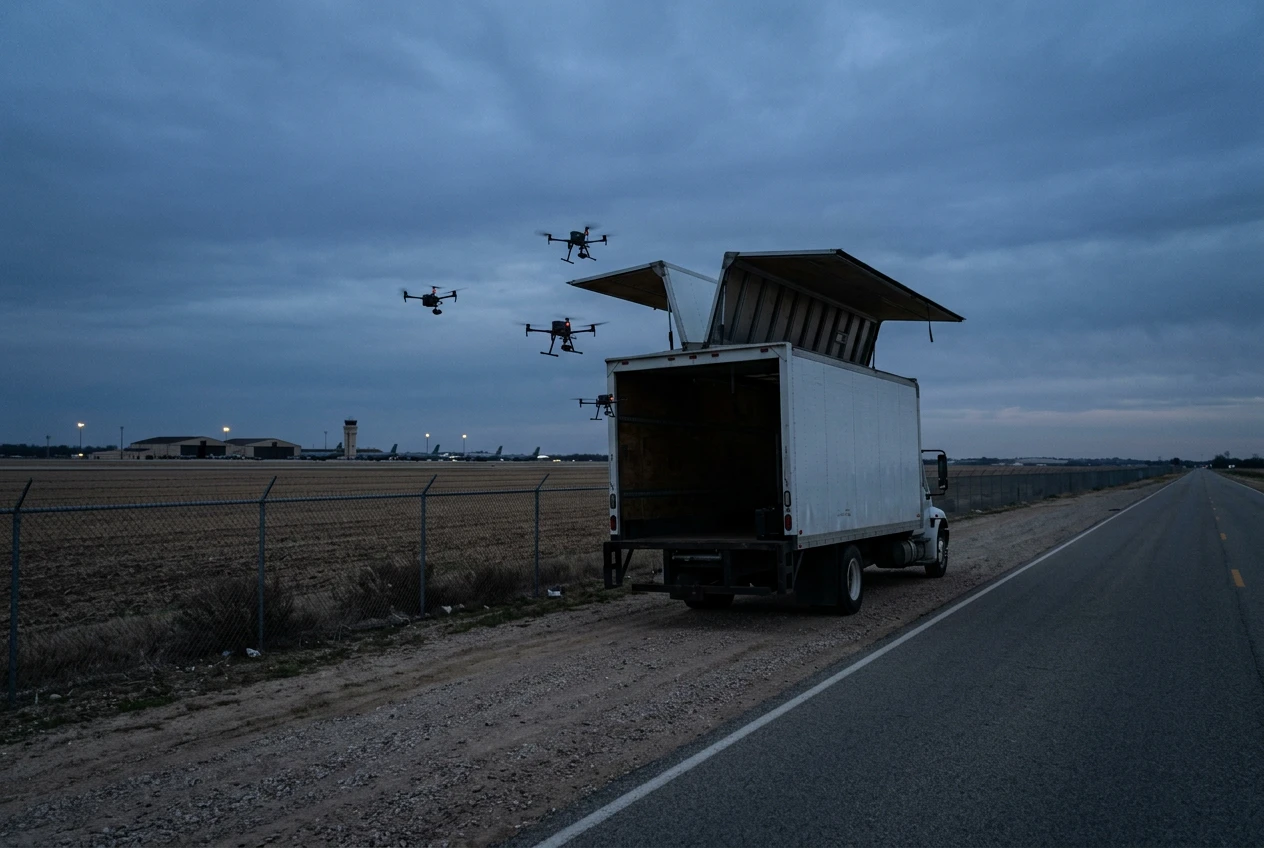
For security teams, the lesson is that an unidentified drone can create a serious operational problem before its purpose is established. Facilities need a way to verify alerts, assess potential risks and make decisions without relying entirely on visual confirmation or improvised responses. - Operation Spiderweb in Ukraine: On 1 June 2025, Ukraine launched Operation Spiderweb, a coordinated drone operation against Russian military airfields. According to Ukrainian officials, 117 drones concealed in lorries were released near four airfields. Ukraine said up to 41 aircraft were struck. The operation demonstrated how drones can be deployed from locations far removed from a conventional launch site or front line.
For facility operators, the wider lesson is clear: a security perimeter marks the boundary of a site, but it does not necessarily mark the boundary of the threat. Vehicles, nearby buildings and other potential launch points outside the fence may also need to be considered in a site’s risk assessment.
- Jammu to Punjab attacks in India: On 27 June 2021, two explosives-laden drones struck the technical area of Jammu Air Force Station. The incident highlighted the potential for unmanned aircraft to threaten military installations without requiring an attacker to cross a physical boundary. The threat has also been evident along India’s western border.
According to reporting by All India Radio, the BSF’s Punjab Frontier seized 272 drones between January and November 2025. During the same period, authorities reported recovering more than 367 kg of heroin, over 10 kg of RDX and 200 weapons. During Operation Sindoor in May 2025, Indian officials also described the use of the Integrated Counter-UAS Grid and air-defence systems against Pakistani drones and missiles targeting military sites.
Taken together, these incidents show why counter-drone preparedness cannot be treated as a single-sector concern. The risks differ across military installations, border areas, transport hubs and civilian infrastructure, but all require a considered approach to detection, assessment and response.
Five Types of Drone Threats Security Teams Face
| Threat type | What it can involve | Potentially exposed sites | Threat type |
|---|---|---|---|
| Surveillance and espionage | Repeated overflights to observe security arrangements, equipment or sensitive activity | Military bases, energy facilities, ports and other sensitive sites | Surveillance and espionage |
| Smuggling and contraband | Unauthorised delivery of narcotics, weapons or other illicit payloads | Borders, prisons and controlled facilities | Smuggling and contraband |
| Operational disruption | An unidentified drone sighting that forces a temporary pause while the risk is assessed | Airports, stadiums and large public events | Operational disruption |
| Kinetic attack | A drone used to carry or deliver an explosive or other harmful payload | Military sites, logistics hubs and critical infrastructure | Kinetic attack |
| Coordinated mass drone attack | Multiple drones deployed to stretch detection, tracking or response capacity | High-value military assets and critical facilities | Coordinated mass drone attack |
A drone may also present more than one type of risk. An aircraft first observed conducting surveillance, for example, may be difficult to assess until more information is available.
The practical takeaway: a counter-drone strategy should be designed around the range of threats a site could face, not just the most visible or dramatic scenario.
Why Drones Are Hard to Detect and Stop
Drones are difficult to detect because many operate at low altitudes, move slowly and have relatively small radar signatures. Buildings, terrain, birds and background radio activity can complicate detection further.
No single sensor is suited to every drone, environment or operating condition. Effective systems therefore combine different detection methods, helping operators build a clearer picture from multiple sources.
- RF-silent and fibre optic drones: Many counter-drone systems use radio-frequency (RF) detection to identify signals associated with a drone or its control link. But not every drone relies on a conventional radio connection.
Fibre-optic-controlled drones use a physical cable to carry control signals, reducing their dependence on a radio link. This can limit the effectiveness of RF detection and jamming against that link. Pre-programmed aircraft can also continue along planned routes without relying on continuous remote control. These limitations do not make such drones undetectable. They mean security teams may need to use other methods, including radar, electro-optical and infrared (EO/IR) cameras, and other sensors suited to the operating environment.
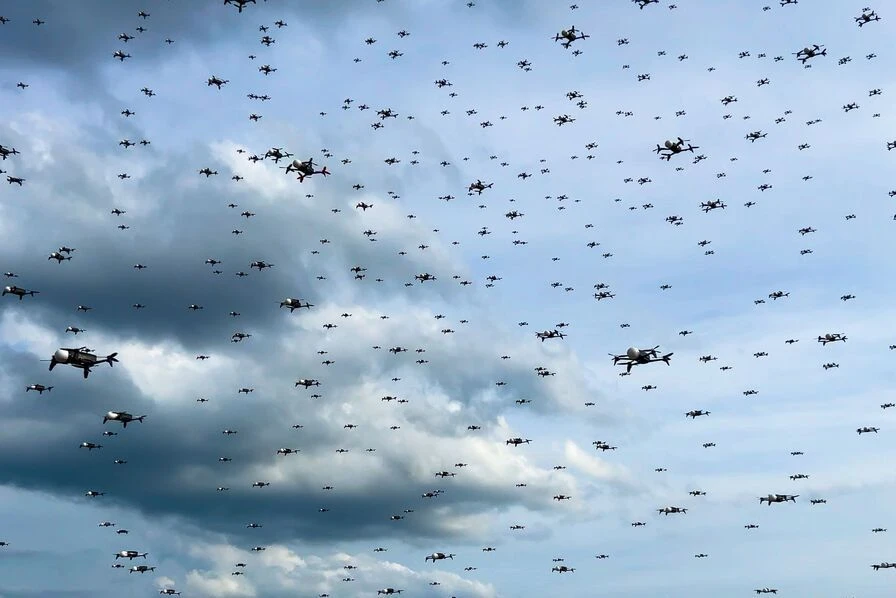
A system built around RF detection alone may leave gaps. A layered approach helps reduce reliance on any one signal or sensor. - Swarms, autonomy and pre-programmed flight: Multiple drones operating at the same time can place pressure on a security team’s ability to track targets, distinguish genuine threats from other activity and decide which alerts require immediate attention. Automation can help manage that workload. Software can combine sensor feeds, maintain tracks and prioritise alerts for operator assessment.
However, automated tools do not remove the need for trained personnel, clear decision-making authority or procedures for escalating a potential threat. The objective is to help operators understand what is happening and direct attention to the threats that need a response.
How Counter Drone Technology Works
| Stage | Technology | What it contributes | Key consideration |
|---|---|---|---|
| Detect | Radar | Detects and tracks objects across a monitored area | Buildings, terrain and birds can create clutter |
| Detect | RF detection | Identifies compatible drone-related signals when available | Limited when a drone does not use a detectable radio link |
| Identify | EO/IR cameras | Provides visual or thermal information to help assess a detected object | Requires suitable visibility, line of sight and sensor cueing |
| Detect | Acoustic sensors | Uses sound to support detection in suitable environments | Performance can be affected by background noise and weather |
| Neutralise: soft kill | RF jamming | Can disrupt compatible radio-control or video links | Subject to legal restrictions and may not affect RF-independent drones |
| Neutralise: soft kill | GNSS spoofing | Can manipulate satellite-navigation signals in suitable conditions | Effect depends on the drone’s design and response; use is regulated |
| Neutralise: hard kill | Interceptor drones | Can physically intercept a target in suitable circumstances | Requires appropriate safety and airspace coordination |
| Neutralise: hard kill | Guns or directed energy systems | Can provide a physical or energy-based response where authorised | Collateral risk and operating environment must be considered |
These capabilities are not interchangeable. The effectiveness of any one approach depends on the drone, its control method, the environment and the permissions available to the operator.
Why Command & Control Matter?
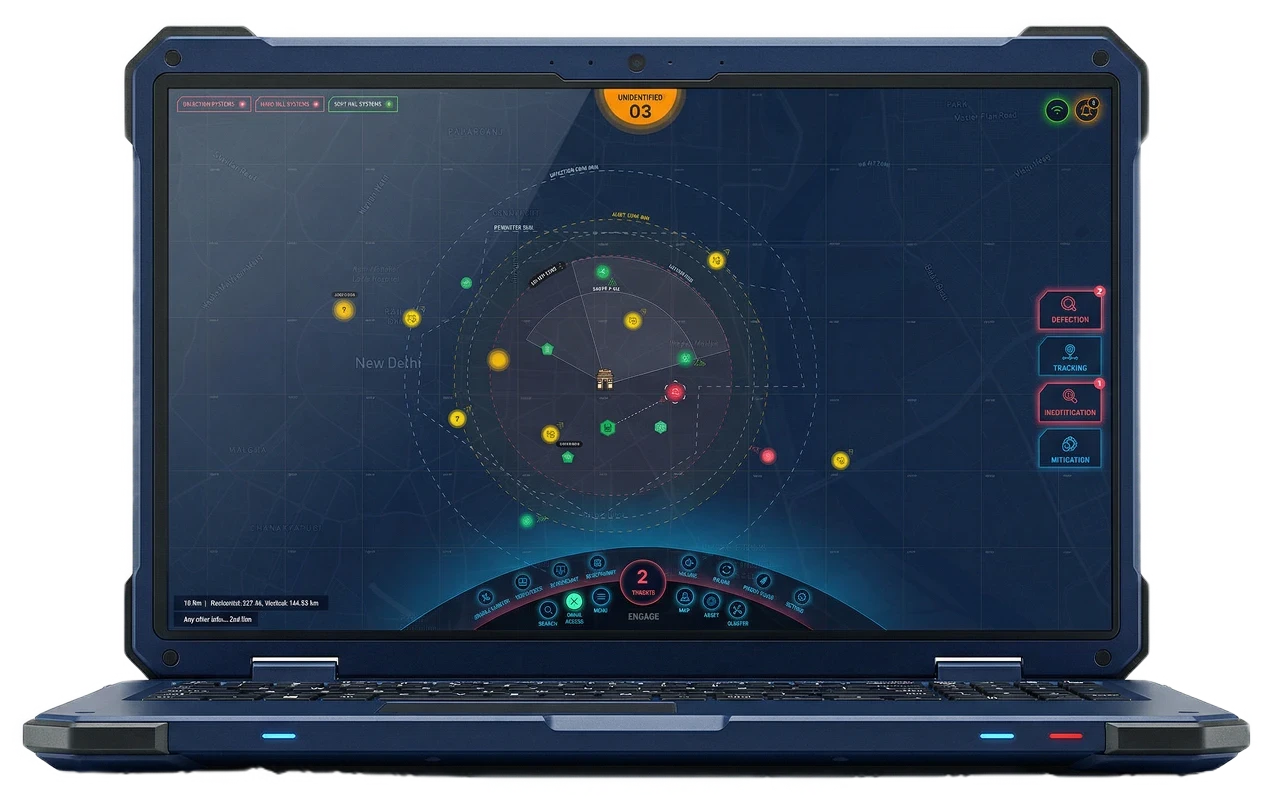
Individual sensors can provide valuable information, but that information is less useful when it remains scattered across separate systems. A command-and-control layer can bring sensor feeds and response capabilities into a common operational picture, helping security teams track activity and coordinate decisions.
Indrajaal’s SkyOS platform is designed to bring counter-drone capabilities together across detection, tracking and mitigation. The value of an integrated approach lies in helping operators work from a more coherent picture of the airspace around a protected site.
Who Needs a Counter Drone System?
Any organisation where an unauthorised drone could endanger people, disrupt essential operations or expose sensitive information should assess its counter-drone requirements. The right configuration depends on the site’s risk profile, layout, operating environment and response responsibilities.
- Airports and civil aviation: fast detection and verification to avoid runway shutdowns.
- Borders: persistent no-fly zones such as Indrajaal Border, which uses solar-powered autonomous spoofers, and vehicle-mounted response from Indrajaal Ranger.
- Critical infrastructure and maritime assets: fixed-site protection for plants, refineries and ports through Indrajaal Infra and Indrajaal Maritime.
- Cities and public events: safe capture with minimal collateral risk using Indrajaal Urban.
- RF-silent threats: physical interception with the Indrajaal Zombee autonomous interceptor drone.
Indrajaal offers a range of counter-drone solutions designed for different operational environments, including Border, Ranger, Infra, Maritime, Urban and the Zombee autonomous interceptor drone. SkyOS provides the command-platform layer. The appropriate solution should be determined by the site’s requirements and the capabilities confirmed for each product.
For the full range of products, please visit the Indrajaal products page.
Rules of the Sky: Who Can Act Against a Drone in India?
In India, flying a drone is governed by the Drone Rules, 2021, but neutralising one is a regulated security function. Jammers, including those inside counter-drone systems, fall under the Cabinet Secretariat’s Jammer Guidelines, 2025, which require prior Ministry of Home Affairs permission before agencies obtain a licence.
Three rules shape how security teams plan:
- Airspace zones: the Digital Sky platform maps India into green, yellow and red zones. The yellow zone around airports was reduced from 45 km to 12 km from the perimeter, and red zone flights need Central Government permission.
- Temporary red zones: states, union territories and law enforcement agencies can declare short-term no-drone zones.
- Mitigation is not self-help: private operators should own detection and alerting, and coordinate any active response with authorised agencies.
For security planners, legal readiness is part of operational readiness. A response plan is incomplete if it identifies a potential threat but leaves unclear who is authorised to act.
A Five-Step Drone Threat Readiness Plan
A drone alert is useful only when a team knows what to do next. A practical readiness plan establishes how sightings are verified, who makes operational decisions and when authorised agencies must be involved.
- Assess your exposure: Identify the assets, people and operations most vulnerable to a drone incident. Consider the site’s layout, surrounding buildings, access routes and potential launch points beyond the perimeter. Review the current airspace status and prioritise risks based on the consequences of an incursion.
- Detect in layers: Assess which sensor technologies are suited to the site and the threats it may face. Where appropriate, combine radar, RF detection and EO/IR cameras rather than relying on a single source. Consider how the system would handle drones that do not emit a detectable radio signal.
- Set decision rights: Specify who verifies a sighting, who can pause operations and who contacts the relevant authorities. Document these responsibilities in a standard operating procedure (SOP) so the response does not depend on informal decisions during an incident.
- Plan a lawful response: Evaluate mitigation options against the site, the threat and the applicable legal permissions. Establish escalation routes with authorised agencies before an incident occurs. Detection, assessment and mitigation should be treated as connected parts of the same plan.
- Rehearse and review. Run exercises, record alerts and review how the team responds. Use the findings to refine procedures, address gaps and update training as threat methods and technology evolve.
Frequently Asked Questions
There is no single threat that applies to every site. Drone risks include surveillance, smuggling, operational disruption and attacks. The challenge for security teams is that the purpose of an unidentified drone may not be clear at first, making timely detection and assessment important.
RF detection may not identify a drone that does not use a detectable radio link. Depending on the environment and system configuration, radar, EO/IR cameras and acoustic sensors can provide alternative sources of detection information. Combining sensor feeds can help operators assess an alert.
The terms are often used interchangeably. Both generally refer to systems designed to detect, track, identify and support a response to unauthorised or potentially hostile drones. In defence and security contexts, counter-UAS or C-UAS is also widely used.
Private companies should not assume they are authorised to jam, spoof or physically disable a drone. Jammers and active mitigation are subject to applicable legal and licensing requirements. Private facilities should establish detection and reporting procedures and coordinate any response with authorised agencies.
Drone operations near airports depend on the applicable airspace zone, altitude and current restrictions. Under the published Drone Rules framework, some areas between 8 and 12 km from an operational airport may fall within the green zone up to 200 feet (60 metres), while other locations or heights may be subject to yellow- or red-zone restrictions. Always check the current Digital Sky airspace map and obtain any required permissions before flying.
An unidentified drone can pose a potential collision risk to aircraft, particularly during take-off and landing. Airport teams may need to pause or adjust operations while the sighting is assessed and the risk is understood. Timely detection and reliable verification can support better-informed operational decisions.
Follow your site’s incident-reporting procedure. Record relevant details such as the drone’s location, direction and observed activity, if it is safe to do so. Inform the control room and the appropriate authorities. Do not attempt to intercept or bring down the drone yourself.
Conclusion: Drone Threats Reward the Prepared
Drone incidents at airports, borders and critical facilities point to a common challenge: the time between detecting an aircraft and understanding the risk it presents can have significant operational consequences.
No single sensor or countermeasure addresses every scenario. Effective preparedness starts with understanding a site’s exposure, combining suitable detection capabilities, establishing clear decision-making responsibilities and planning a lawful response before an incident occurs.
Indrajaal’s counter-drone solutions are designed for different operating environments, with SkyOS providing a command-platform layer for coordinated operations.
Explore Indrajaal’s counter-drone systems or speak to the Indrajaal team to assess your site’s drone threat exposure.