

Drone intelligence is advancing faster than ever. Today, AI-powered sensing, autonomous navigation, and all-weather vision are rapidly becoming standard capabilities rather than exceptions. With each technological leap, drones expand what they can see, reach, and achieve. As a result, for airspace security, this progress serves as a clear warning: as drones grow smarter and more autonomous, airspace defence must evolve even faster—or risk falling irreversibly behind an accelerating threat curve.
Table of Contents
- A New AI-Powered Drone with Advanced Vision
- Lessons from Past Drone Capability Transitions
- Rapid Evolution of Enterprise Drone Technology
- How Advanced Capabilities Expand the Threat Landscape
- Limitations of Traditional Counter-Drone Approaches
- The Required Mindset Shift: From Procurement to Capability
- Indrajaal’s Commitment to Airspace Security
- Conclusion
A New AI-Powered Drone with Advanced Vision
A recent development in the world of drone technology caught the eye of experts – and raised alarm bells about the next wave of drone threats.
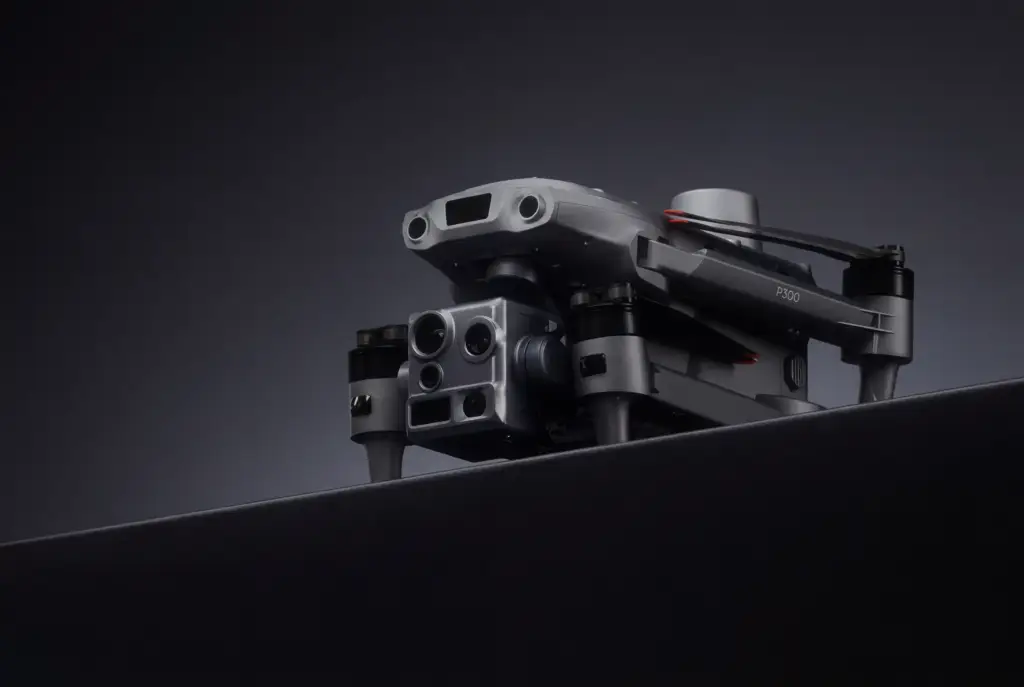
It seems innocuous enough. Chinese drone maker GDU launched an AI-powered drone with full night-colour vision and advanced optical de-fogging. In plain words, this means the drone has 50% better visibility than existing drones in rain, fog, and mist. The drone is an enterprise product, pitched for use cases such as public safety, industrial inspection,s and emergency response.
Lessons from Past Drone Capability Transitions
But history tells us something else.
Every major leap in enterprise drone capability – better sensing, better autonomy, better performance in denied environments – has a habit of travelling fast. It moves from rescue to reconnaissance. It shifts from civil to tactical. And it evolves from “useful” to “usable against you.”
This isn’t just a product launch. It’s a signal. And for those thinking about airspace security, it’s one worth paying attention to.
Rapid Evolution of Enterprise Drone Technology
Recent developments in enterprise drone technology highlight how rapidly unmanned aerial systems are evolving. The latest generation of platforms now integrates artificial intelligence, advanced imaging, LiDAR-based navigation, and autonomous flight capabilities that allow operations in rain, fog, low light, and GPS-denied environments.
How Advanced Capabilities Expand the Threat Landscape
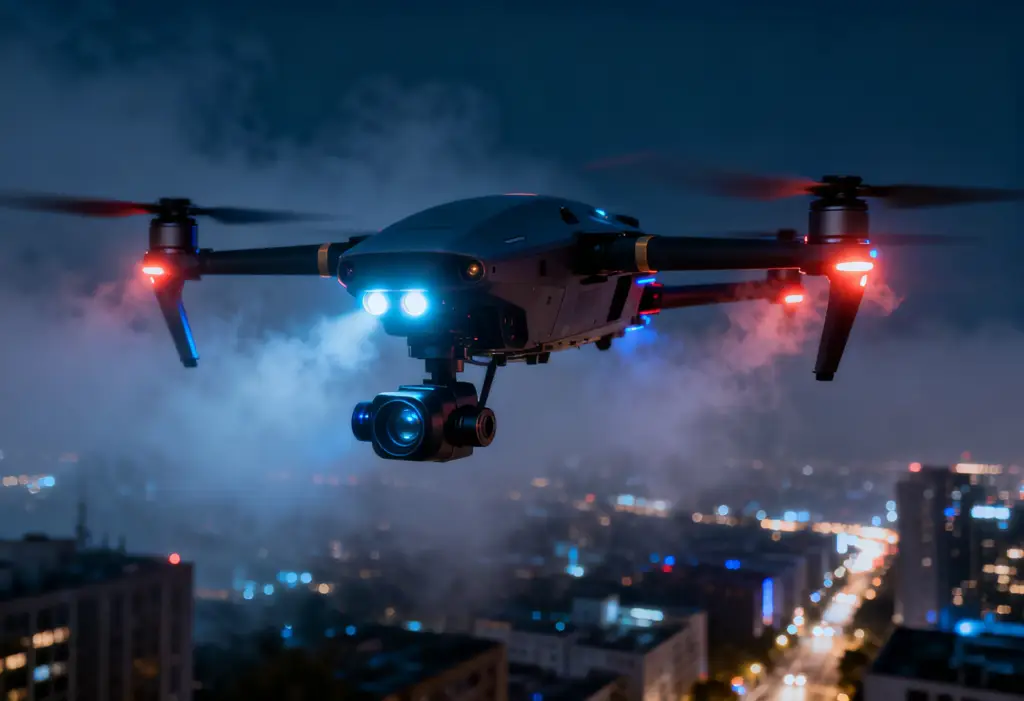
The same capabilities that allow drones to navigate challenging terrain and weather conditions can enable unauthorised or hostile systems to operate with greater stealth and persistence. AI-powered obstacle avoidance, long-range sensors, and autonomous navigation reduce dependence on human control, making such platforms harder to detect, track, and intercept. As drones become more intelligent and self-reliant, the threat landscape expands beyond hobby devices to include highly capable aerial systems with sophisticated functionality.
This shift has direct implications for national security, critical infrastructure, and urban airspace management.
Limitations of Traditional Counter-Drone Approaches
Traditional counter-drone approaches were designed for simpler threats and limited flight envelopes. Modern aerial systems demand a more advanced and integrated response framework that combines real-time detection, AI-driven threat assessment, and autonomous neutralisation. Defence solutions must operate continuously across varied environmental conditions while maintaining accuracy, speed, and reliability.
Airspace security can no longer be reactive. It must be predictive, adaptive, and resilient.
The Need for Indigenous and Purpose-Built Defence Systems
For governments, defence forces, and strategic enterprises, protecting the skies now requires purpose-built systems that are designed specifically for evolving drone capabilities. Indigenous, intelligent, and mission-ready defence architectures play a critical role in safeguarding borders, sensitive installations, and high-value assets.
The Required Mindset Shift: From Procurement to Capability
At the same time, we also need a big mindset shift. When drone capabilities evolve this fast, buying a product is no longer enough. For national security planners and defence decision-makers, the real question isn’t “what did we procure”, but “what can we do today that we couldn’t do yesterday?” This is where a Capability-as-a-Service mindset becomes critical – one that prioritises continuously upgraded sensing, detection, decision-making and response over static hardware. In a landscape where civilian breakthroughs can become tactical advantages almost overnight, resilience comes from staying current, not stocked. Organisations that think in capabilities rather than platforms won’t just keep up – they’ll stay ahead.
Indrajaal’s Commitment to Airspace Security
The next phase of airspace management will be defined not only by smarter drones, but by smarter defence.
At Indrajaal, this responsibility drives our commitment to building autonomous, AI-powered counter-drone systems that secure critical airspace with precision, reliability, and scale.
Conclusion
Ultimately, the future of airspace security will not be decided by smarter drones alone, but by whether defence systems can consistently outpace them. In a landscape where civilian innovations can transform into tactical threats overnight, static and reactive countermeasures are no longer sufficient. Instead, what’s required is adaptive, autonomous, and continuously evolving defence capability. At the core of this approach, Indrajaal develops AI-powered airspace defence systems designed to anticipate change rather than chase it—because in modern airspace, staying ahead is the only form of security.