

On the night of 7 to 8 May 2025, Pakistan launched drones and missiles at military sites from Srinagar to Bhuj. According to the Government of India, they were neutralised by an Integrated Counter-UAS Grid and air defence systems, with the Indian Air Force’s Integrated Air Command and Control System (IACCS) bringing Army, Navy and Air Force assets together.
The significance lies in the word integrated.
Effective counter-drone defence depends on more than individual sensors or interceptors. It depends on how well detection, decision-making and response systems work together.
As drone threats become more diverse, security teams need systems that can combine inputs from multiple sources, build a common operating picture and coordinate responses quickly. This guide examines what counter-UAS interoperability means, the standards supporting it, how organisations can assess it and what buyers should consider before investing.
Table of contents
- What Is Counter-UAS Interoperability?
- Why Standalone Counter-UAS Systems Fall Short Against Today’s Drone Threats
- Closed vs Open Counter-UAS Architecture
- The Standards Making Interoperability Real
- Interoperability in Action: India’s Integrated Counter-UAS Gri d
- Five Levels of Counter-UAS Interoperability
- What Interoperability Means for Critical Infrastructure and Airspace Security
- The Risks Interoperability Must Manage
- A Buyer’s Checklist for Interoperable Counter-UAS
- Frequently Asked Questions
- Conclusion: Counter-UAS Is Becoming a Team Sport
What Is Counter-UAS Interoperability?
Counter-UAS interoperability is the ability of detection sensors, command-and-control (C2) software and mitigation systems to exchange information and coordinate their functions, including when they come from different manufacturers.
In practice, radar may detect an object, radio-frequency (RF) sensors may identify its control signals, and an electro-optical camera may provide visual confirmation. An interoperable system brings these inputs together to create a more complete picture of the potential threat. It can then help authorised operators coordinate an appropriate response.
Without interoperability, each device may operate through its own interface, generate separate alerts and require an individual operator. This creates a fragmented workflow in which people must manually connect information from multiple systems.
The difference is fundamental: interoperability turns individual capabilities into a coordinated defence architecture.
Why Standalone Counter-UAS Systems Fall Short Against Today’s Drone Threats
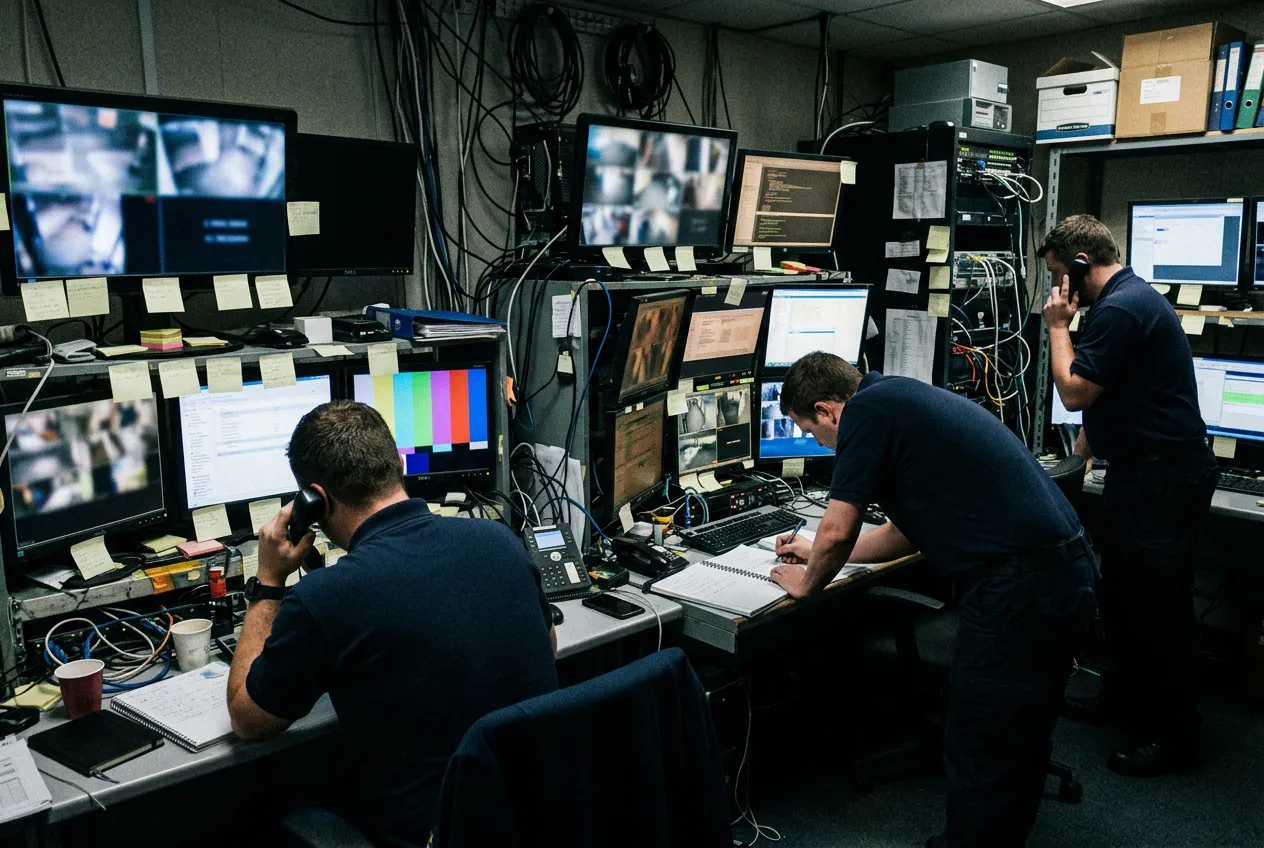
No single sensor or mitigation technology can address every type of drone threat in every environment. Radar performance can be affected by clutter, RF detection has limitations against radio-silent or fibre-optic-controlled drones, and cameras often need cues from other sensors to identify objects efficiently. When these capabilities operate independently, operators must correlate information manually. This adds complexity at precisely the moment when fast, informed decisions matter most.
More sensors, more screens, slower decisions
Adding more detection equipment does not automatically improve security. Without integration, each additional sensor can introduce another stream of alerts, another interface to monitor and another source of information to reconcile.
This challenge extends beyond individual sites. A July 2026 report on drone incursions across Europe highlighted fragmented responses and difficulties with attribution. The findings illustrate a wider operational problem: detection capability is only part of the equation. Organisations also need effective information-sharing and response mechanisms.
For airports, military installations and critical infrastructure, the objective should be to reduce the time between detection, verification and an authorised response. A shared operating picture helps operators assess threats with greater context and coordinate decisions across connected systems.
Standalone counter-UAS systems fall short because no single sensor or effector covers every drone threat. Radar struggles in clutter, RF detection misses radio-silent drones, and cameras need cueing. Without a shared picture, operators must correlate alerts manually, which costs the minutes that matter most when a drone approaches an airport, base or power station.
The hidden cost of vendor lock-in
Drone technology continues to evolve, while security infrastructure often operates on multi-year investment cycles. A system that relies exclusively on one manufacturer’s equipment can limit an organisation’s ability to introduce new sensors, update capabilities or respond to emerging threats.
Consider a facility that needs to add a new detection technology to address a previously unrecognised drone profile. If its existing architecture cannot accommodate third-party equipment, the upgrade may require extensive custom engineering or replacement of existing components. An open, modular architecture can offer greater flexibility by allowing compatible components to be added or upgraded through defined interfaces.
The goal is to build a system that can adapt as threats, technologies and operational needs change.
Closed vs Open Counter-UAS Architecture
The choice between closed and open architectures affects procurement, integration, upgrades and long-term operating costs. Closed, single-vendor systems can simplify initial procurement and establish a clear point of responsibility. Open, standards-based architectures can provide greater flexibility, provided integration, security and accountability are managed effectively.
| Factor | Closed architecture | Open, standards-based architecture |
|---|---|---|
| Sensor selection | Primarily limited to one manufacturer’s ecosystem | Compatible components can be sourced from multiple suppliers |
| Upgrade path | Closely tied to the vendor’s product roadmap | Modular upgrades may be possible as requirements evolve |
| Integration | Can be simpler within one vendor’s ecosystem | Requires defined interfaces and integration testing |
| Data sharing | May rely on proprietary formats | Common interfaces can support information exchange |
| Lifecycle costs | Potential exposure to vendor lock-in | Greater sourcing flexibility, depending on integration costs |
| Accountability | A single supplier may own more of the system | Clear responsibilities are needed across suppliers and integrators |
The Standards Making Interoperability Real
Interoperability needs technical specifications that define how systems exchange information. Without common interfaces and agreed data formats, integration can become dependent on custom development and vendor-specific arrangements.
In counter-UAS, SAPIENT is an important example of an architecture designed to connect sensors, effectors and decision-making systems. Civil aviation also uses established surveillance data formats, while European policy increasingly emphasises testing, coordination and interoperability in counter-drone security.
SAPIENT: from UK development to wider adoption
SAPIENT stands for Sensing for Asset Protection with Integrated Electronic Networked Technology. Developed by the UK’s Defence Science and Technology Laboratory (Dstl) and Innovate UK, it provides an open architecture for connecting sensors and decision-making modules with limited additional software engineering.
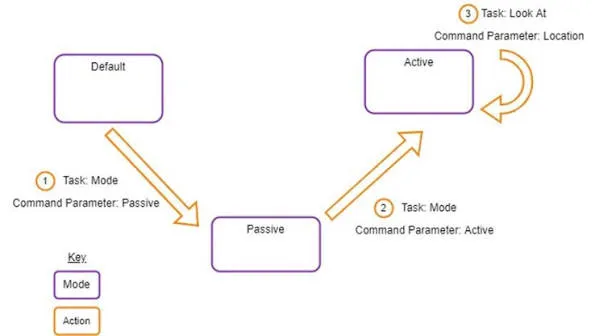
Its purpose is to help different components exchange information and support coordinated, increasingly automated operations. During NATO’s Counter-Uncrewed Air System Technical Interoperability Exercise in November 2021, SAPIENT enabled more than 70 connections between counter-UAS and command-and-control systems. The exercise connected 17 sensor modules from different vendors to seven decision-making modules, with some connections achieved through plug-and-play integration.
The results demonstrated the practical value of common interfaces: compatible components can be connected and coordinated without building every integration from scratch.
The UK Ministry of Defence has adopted SAPIENT as its counter-UAS standard. The architecture has also been evaluated through NATO exercises and is being adopted as the basis of a NATO counter-drone standard.
For buyers, the broader lesson is clear. Interoperability should be demonstrated through supported interfaces, documented compatibility and testing, not accepted as a marketing claim.
Airspace data standards beyond defence
Counter-drone deployments around airports must account for civil aviation operations as well as security requirements. Detection and response systems need to work within established air traffic management procedures and coordinate with relevant authorities.
EUROCONTROL’s ASTERIX is a family of standard formats for exchanging surveillance information in air traffic management. Where a counter-UAS deployment needs to share surveillance data with aviation systems, compatibility with recognised formats can support integration.
However, technical compatibility alone is insufficient: deployment also requires appropriate procedures, validation and coordination with the airport and aviation authorities.
Europe’s 2026 counter-drone action plan
On 11 February 2026, the European Commission presented its plan to counter drone threats. The plan focuses on stronger cooperation, improved detection, coordinated responses and greater defence readiness across the European Union. It also highlights the importance of industrial cooperation and a more coordinated approach to counter-drone capabilities.
For the wider industry, this signals that counter-UAS procurement is increasingly about how capabilities work together, not simply which individual technologies are deployed. Testing, common approaches and coordination between civilian and defence stakeholders will remain important as the market develops.
Interoperability in Action: India’s Integrated Counter-UAS Grid
India’s response to the drone and missile attacks of May 2025 offers a relevant example of layered defence and coordination. Government statements describe an integrated approach combining counter-UAS capabilities and air defence systems, with IACCS connecting assets across the three armed services.
The operational principle extends beyond military deployments. Airports, ports, power plants and other critical infrastructure sites may use equipment from different manufacturers and rely on multiple security teams or agencies. Their ability to share information and coordinate action can influence the effectiveness of the overall response.
For a civilian facility, this could mean combining radar detections with RF information and camera-based verification, then sharing relevant alerts with authorised security personnel through a central command platform.
The scale and requirements will differ from a national defence network, but the underlying challenge is similar: multiple capabilities must contribute to one coherent understanding of the airspace.
Five Levels of Counter-UAS Interoperability
| Level | Name | What it looks like | Typical limitation |
|---|---|---|---|
| 0 | Standalone | Each sensor or mitigation system operates independently | Manual correlation and fragmented information |
| 1 | Co-located | Multiple systems are available in the same control room | Operators still need to reconcile information manually |
| 2 | Data-integrated | Sensors feed a common C2 platform, and detections can be correlated | Mitigation systems may still require separate tasking |
| 3 | Coordinated effects | C2 can cue sensors and coordinate compatible response systems | Coordination may be limited to one site or deployment |
| 4 | Networked grid | Multiple sites and agencies share information and coordinate responses | Requires secure links, governance and common operating procedures |
The model is intended as a practical assessment tool, not an established industry certification or universal maturity standard.
A site can use it to identify where its current architecture sits, where manual processes create delays and what capabilities are needed next. Progression will depend on the threat environment, operational requirements, regulatory constraints and available infrastructure.
What Interoperability Means for Critical Infrastructure and Airspace Security
For critical infrastructure operators, interoperability can make counter-UAS investments more adaptable and easier to coordinate. A facility may need to expand its detection coverage, integrate new sensors or connect security teams across multiple locations. A well-designed architecture can help accommodate these requirements without requiring a complete system replacement.
Indrajaal’s counter-UAS ecosystem uses SkyOS, its C5ISRT command platform, to bring detection, tracking, identification and mitigation capabilities into a unified command system. The appropriate configuration depends on the site, threat profile and operational requirements.
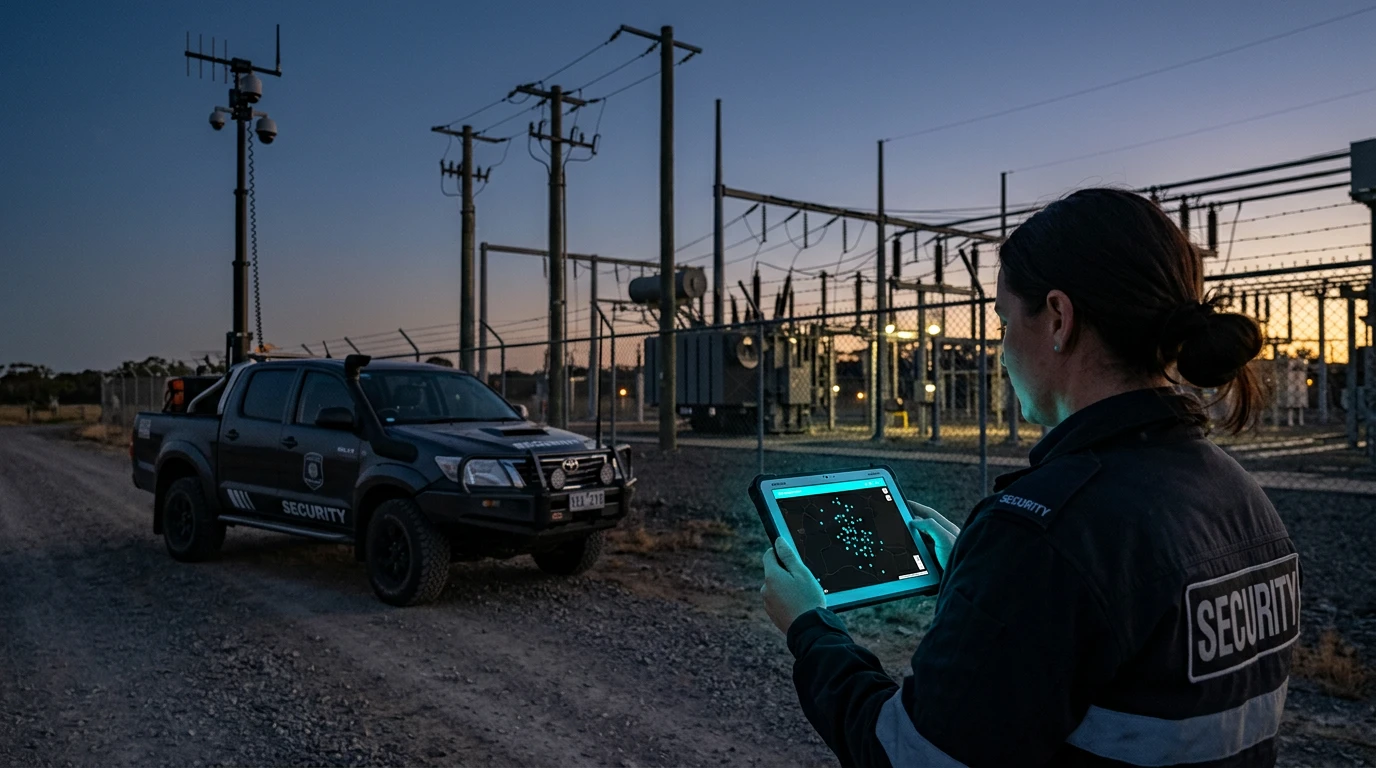
Indrajaal’s products follow this layered model, with every system powered by the SkyOS command platform, which links sensors and effectors into a unified command system.
See the full range on the Indrajaal products page.
The Risks Interoperability Must Manage
A robust programme should address four areas from the outset:
- Cybersecurity: Authenticate connected devices, secure data in transit, control access and monitor interfaces for suspicious activity.
- Testing and validation: Verify that components work together under realistic operating conditions, including when individual systems fail or data quality degrades.
- Latency and reliability: Measure end-to-end performance, from initial detection through operator assessment and response coordination. Integration should improve decision-making without introducing unacceptable delays.
- Legal authority and governance: Define who can access information, who can authorise mitigation and which procedures apply. In India, the use of jamming equipment is subject to the relevant government rules and permissions, including the Cabinet Secretariat’s Jammer Guidelines
A connected architecture is only as dependable as its security controls, integration testing and operating procedures.
A Buyer’s Checklist for Interoperable Counter-UAS
Six questions can help evaluate a proposed solution:
- Which interface standards does the system support? Ask for technical documentation and evidence from independent interoperability tests.
- Can third-party components be integrated? Establish whether new sensors or effectors can be added without extensive custom engineering.
- Does the platform fuse detections into a common track? A unified display is not necessarily the same as correlated, contextualised information.
- Can the system exchange information with relevant external platforms? For airports and public infrastructure, establish which formats and interfaces are supported and what approvals are required.
- How is the architecture secured? Ask about authentication, encryption, access controls, data ownership and responsibility for cybersecurity.
- What is the measured end-to-end response time? Request test results covering detection, verification, operator decision-making and authorised response, not just individual device specifications.
Frequently Asked Questions
C-UAS stands for counter-unmanned aircraft systems: technologies that detect, track, identify and neutralise unauthorised drones. The terms counter-UAS, counter-drone and anti-drone are used interchangeably.
SAPIENT is an open software interface developed by the UK’s Defence Science and Technology Laboratory that lets sensors and decision-making modules from different vendors work together. The UK Ministry of Defence uses it as its counter-UAS standard, and NATO has trialled it for adoption.
No single sensor or effector defeats every drone threat. Interoperability lets radar, RF, camera and mitigation systems share one picture, so operators decide faster and can add new capabilities as threats evolve.
A closed architecture only works with one manufacturer’s components. An open architecture uses published interfaces so sensors, C2 software and effectors from several suppliers can be combined and upgraded independently.
Yes, if they exchange data in formats air traffic management already uses, such as EUROCONTROL’s ASTERIX, and operate under agreed procedures with the airport and aviation authorities.
Not if it is designed properly. Every interface must be encrypted, authenticated and tested, and integrations should be validated independently before deployment.
Ask for evidence: supported standards, results from independent interoperability exercises and a live demonstration integrating a third-party sensor or effector.
Conclusion: Counter-UAS Is Becoming a Team Sport
The future of counter-UAS will depend on how effectively detection, decision-making and mitigation systems work together. India’s integrated air defence response, NATO’s evaluation of SAPIENT and Europe’s 2026 counter-drone plan all underline the growing importance of coordination, shared information and compatible technologies.
For organisations protecting airports, borders and critical infrastructure, interoperability can help turn individual investments into a more adaptable defence architecture. The priority is to select systems that meet operational requirements today while allowing room for future upgrades.
Indrajaal builds layered, AI-enabled counter-UAS systems powered by SkyOS for airports, borders, cities, critical infrastructure and military sites. Explore Indrajaal’s products, learn more about Indrajaal or talk to our team about building an interoperable drone defence for your site.