

Table of contents
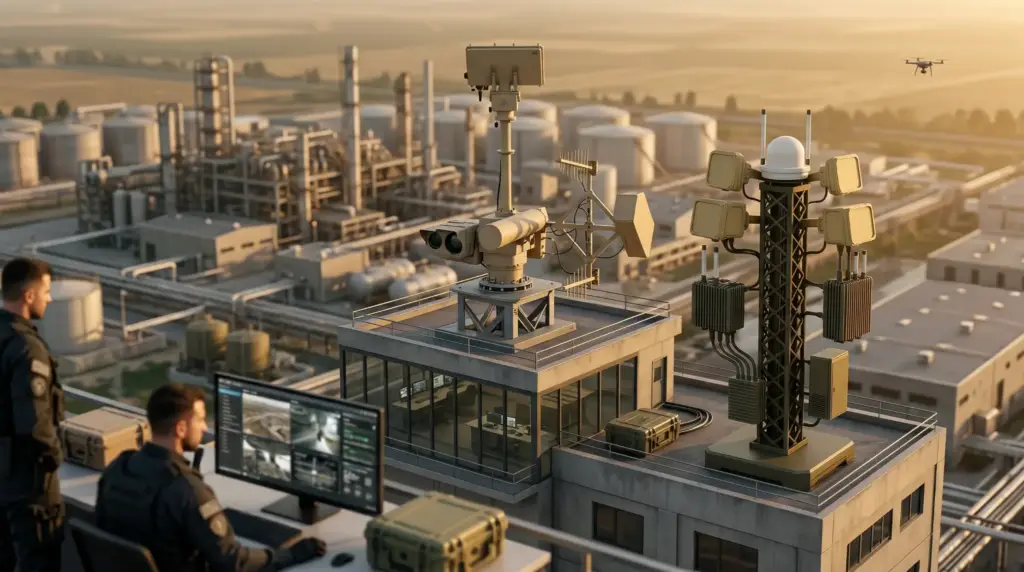
It does not take a sophisticated weapon to disrupt airspace anymore.
Sometimes, it just takes a drone.
Lightweight, affordable, and easy to operate, drones have created a new category of security risk that traditional systems struggle to handle. Traditional air defence systems were never designed to detect or neutralise small, low-flying unmanned aircraft. This gap has led to the rapid evolution of anti-drone systems, also known as counter-unmanned aircraft systems (CUAS).
This guide breaks down how anti-drone systems work, the technologies behind them, and why they are becoming essential to modern airspace security.
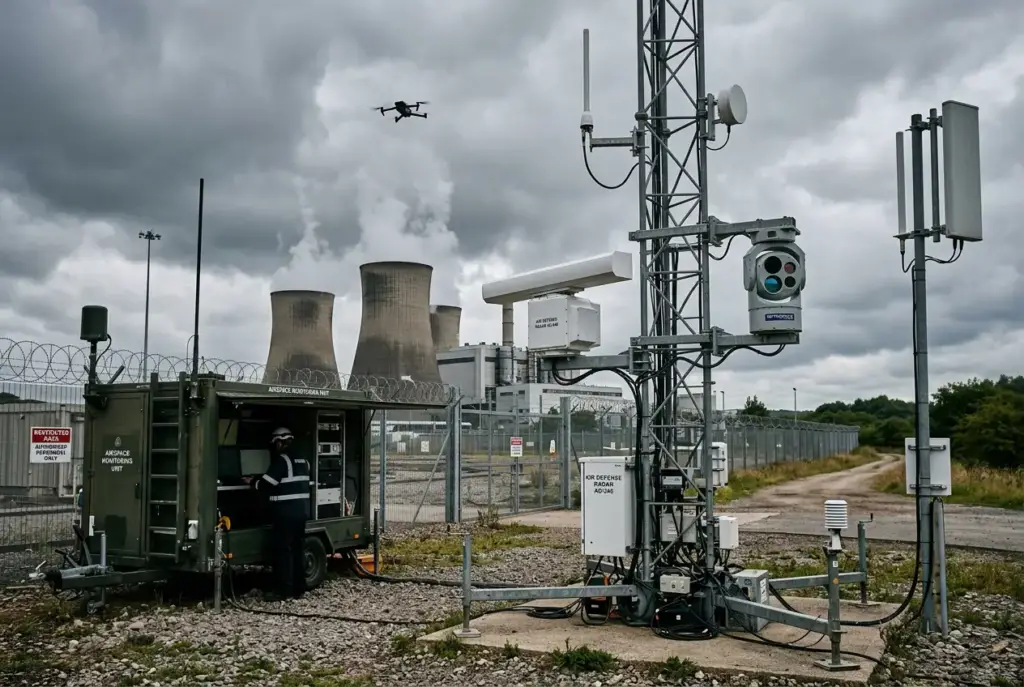
What are anti-drone systems?
Anti-drone systems are integrated security solutions designed to detect, track, identify, and neutralise unauthorised drones. Unlike conventional radar-based defence, CUAS technology focuses on small unmanned aerial vehicles that are harder to detect due to their size, speed, and flight patterns.
A complete anti-drone system typically operates in three stages: detection, identification, and mitigation. Each stage uses a combination of advanced technologies to ensure precise and effective threat response.
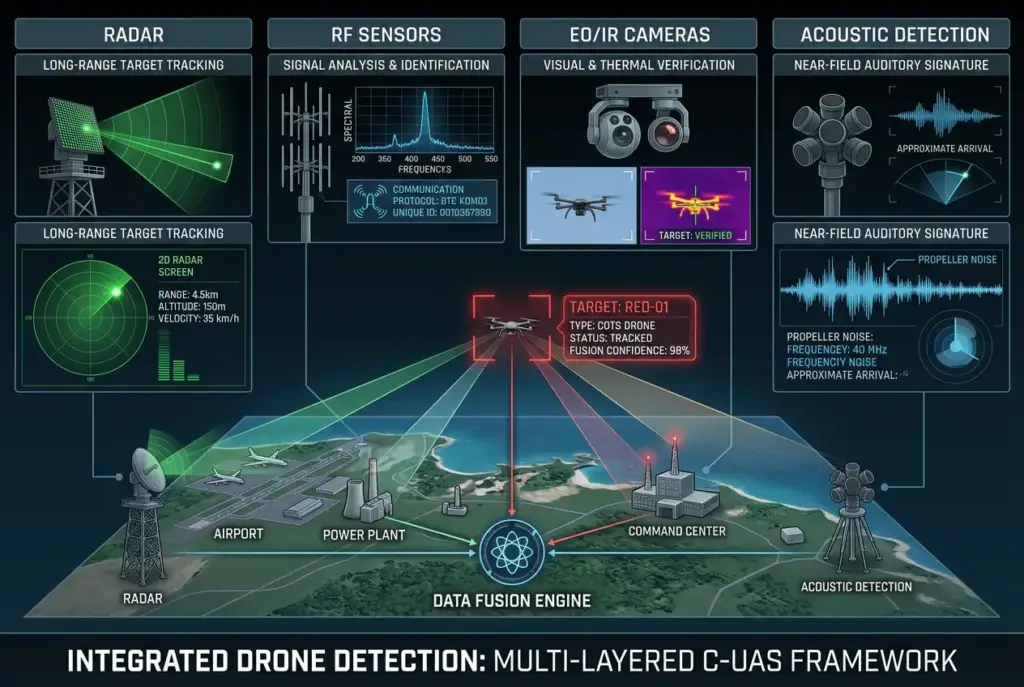
Stage 1: Drone detection:
The first step in any counter-drone system is identifying the presence of a drone. This is more complex than it sounds, as drones often fly at low altitudes and can blend into background noise.
- Radar Systems: Specialised radar systems are used to detect small aerial objects. Unlike traditional radar, these are optimised to identify low radar cross-section targets such as drones. They track movement, altitude, and speed in real time.
- Radio Frequency Sensors: RF sensors detect communication signals between a drone and its operator. By scanning the frequency spectrum, these systems can identify active drones even before they enter restricted zones.
- Electro-Optical and Infrared Cameras: Visual sensors provide confirmation through high-resolution imaging. Infrared cameras are especially useful in low-light or night conditions, enabling continuous monitoring.
- Acoustic Sensors: Some anti-drone technologies use sound signatures to detect drones. While less common, acoustic detection can be effective in specific environments where other signals are limited.
By combining multiple detection methods, CUAS solutions reduce false positives and improve accuracy.
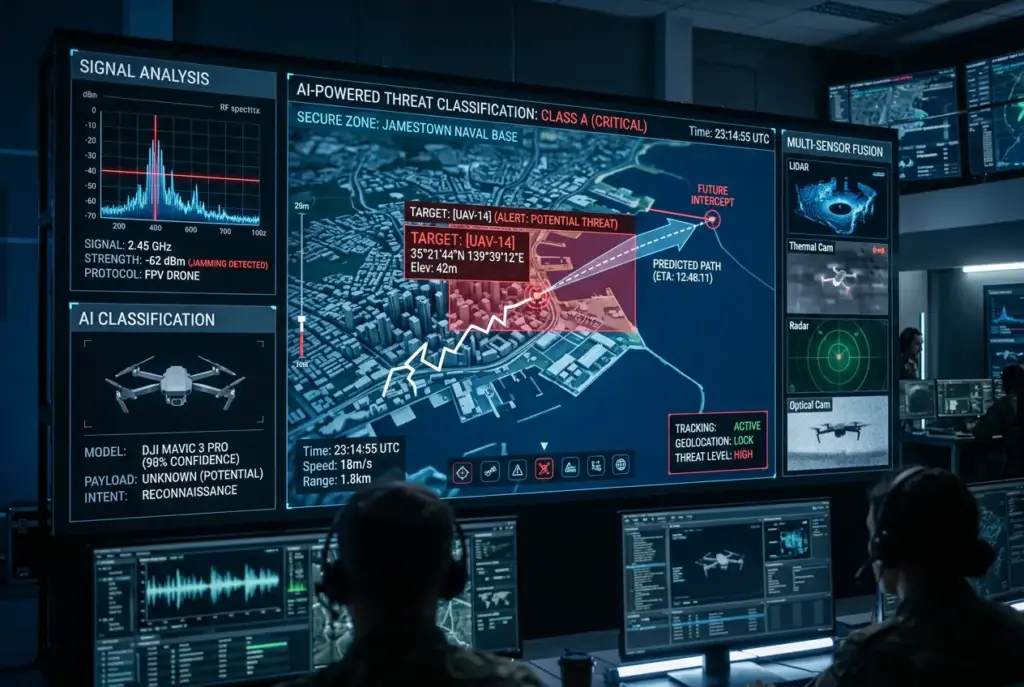
Stage 2: Identification and tracking:
Once a drone is detected, the system must determine whether it poses a threat. Not every drone is hostile, so accurate identification is critical.
- Signal analysis: RF-based systems analyse communication patterns to identify the drone model and its control source. This helps distinguish between authorised and unauthorised drones.
- Visual verification: Camera systems provide real-time footage, allowing operators or AI systems to confirm the drone type and payload.
- AI-powered classification: Artificial intelligence plays a key role in modern anti-drone systems. Machine learning algorithms process data from multiple sensors to classify threats based on behaviour, flight path, and signal patterns.
- Tracking and geolocation: Advanced CUAS technology can track both the drone and its operator. Geolocation capabilities enable security teams to pinpoint the source of the threat, which is critical for enforcement and response.
Stage 3: Drone mitigation:
After identifying a threat, the next step is neutralisation. Anti-drone systems use different mitigation techniques depending on the environment, regulations, and threat level.
- RF jamming: One of the most widely used methods, RF jamming disrupts the communication between the drone and its operator. This can force the drone to land, hover, or return to its origin point.
- GPS spoofing: GPS spoofing manipulates the drone’s navigation system by sending false location data. This can redirect the drone away from restricted areas or force it to land safely.
- Directed energy systems: Laser-based anti-drone technology is emerging as a precise and scalable solution. Directed energy systems can disable drones mid-air without causing collateral damage, making them suitable for high-security zones.
- Kinetic interception: In high-risk scenarios, physical interception methods such as projectiles or interceptor drones may be used. These are typically deployed in defence environments where immediate neutralisation is required.
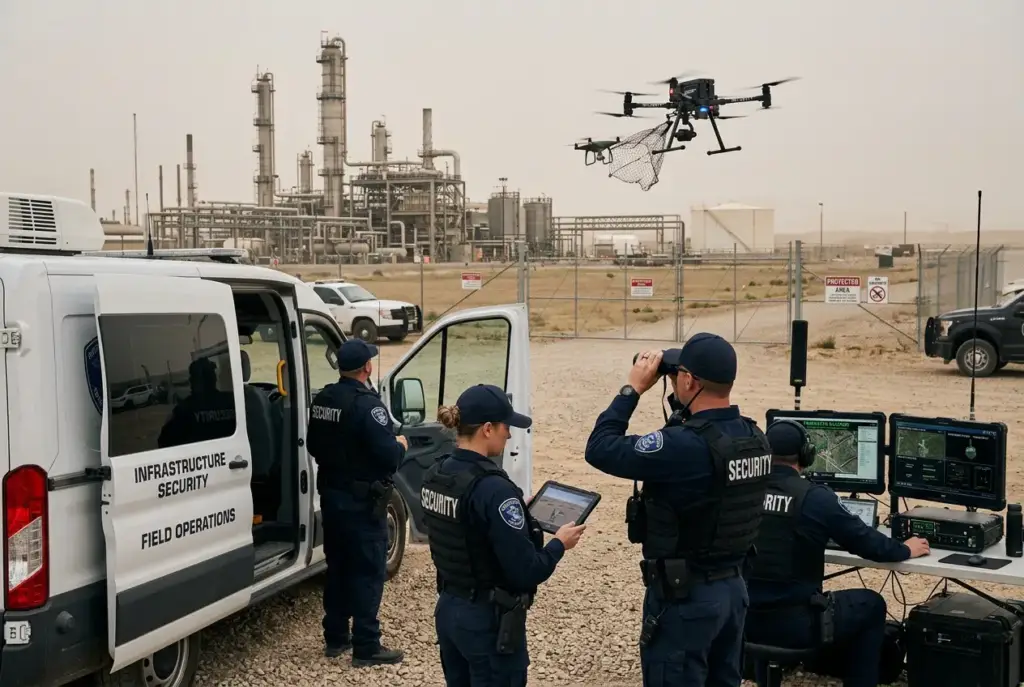
The need for anti-drone systems
The rapid growth of drone usage has made airspace more accessible and more vulnerable. Without dedicated countermeasures, even a single drone can disrupt operations, compromise data, or pose physical risks.
Anti-drone systems provide a proactive layer of security. They enable early detection, accurate threat assessment, and controlled response. As drone technology continues to evolve, CUAS solutions will play a central role in maintaining safe and secure airspace.To truly address this shift, security must move beyond fragmented tools to integrated, intelligent defence ecosystems. This is where Indrajaal stands out.
Designed as an autonomous, wide-area counter-drone defence system, Indrajaal brings together advanced sensing, real-time analytics, and coordinated response within a unified architecture. It does not just detect and neutralise threats. It creates a persistent protective shield that can monitor, assess, and respond across large geographic zones with minimal human intervention.
In an environment where drone threats are becoming more frequent and complex, solutions like Indrajaal represent the next evolution of CUAS. They transform airspace security from reactive defence to continuous, intelligent protection at scale.
Frequently Asked Questions (FAQs)
How do anti-drone systems detect drones?
They use a combination of radar, radio frequency sensors, cameras, and sometimes acoustic sensors to identify drone activity.
Where are anti-drone systems used?
Anti-drone systems are widely used in defence, airports, critical infrastructure, public events, and commercial facilities.
Are anti-drone systems easy to install?
Many modern systems are modular and can be set up based on the size and needs of the area being protected.