

Along India’s borders, a silent crisis is unfolding. No longer limited to surveillance, drones now carry narcotics, weapons, and devastation. Flying low and unseen, they bypass fences and patrols, ultimately dropping contraband into villages where childhood is steadily giving way to addiction. As a result, this is no longer just a border security issue; it has become a humanitarian and generational crisis. As technology reshapes crime, India’s borders are losing more than territory—they are losing futures.
Table of Contents
How Drones Are Fueling a Silent Drug War on India’s Borders
Where the war on drugs begins before childhood ends.
In the border villages of Punjab, Rajasthan, and Manipur, childhood is vanishing quietly. You don’t hear laughter echoing through narrow lanes anymore. You hear the hum of drones and the silence they leave behind.

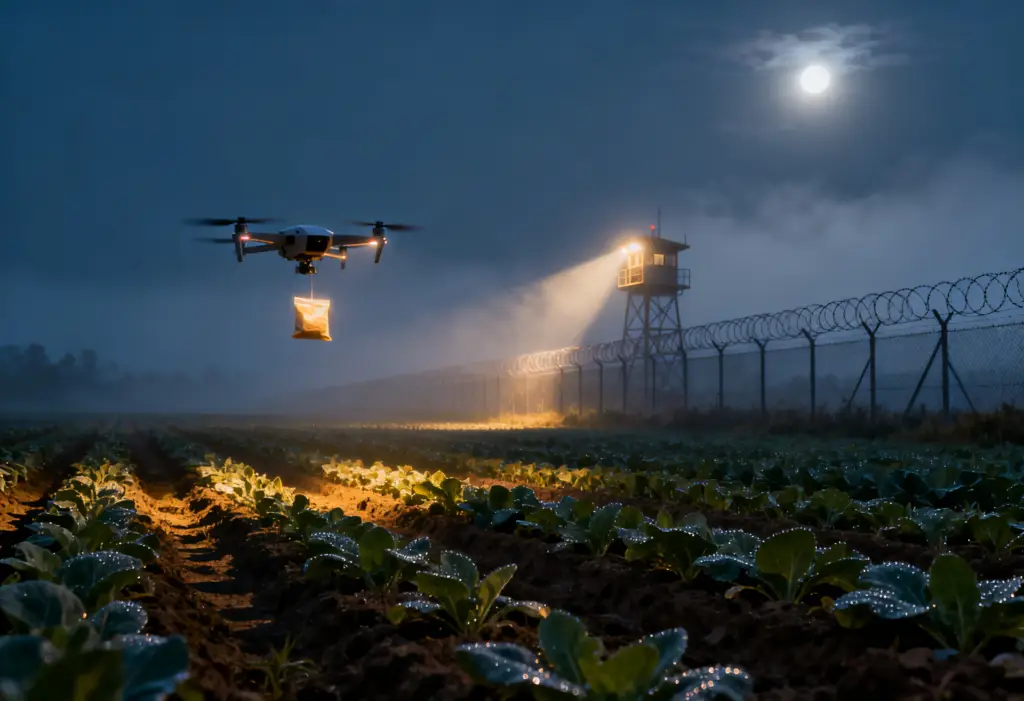
For years, India’s frontiers have been living under the shadow of a slow, invisible invasion. Narcotics now cross borders not on foot, but through the air: small drones, low-flying and unseen, carrying death in white packets. They drop their cargo in farmlands, slip across rivers, and vanish before anyone can look up.
A Mother’s Grief
As reported by the BBC, a heartbreaking story from Punjab shows the depth of the crisis. Lakshmi Devi, holding a photograph of her only son, shared how addiction had pushed her to a point no parent should ever reach. Her son, Ricky Lahoria, just 25, died of a heroin overdose, one of many such tragedies unfolding across the state.
Lakshmi’s story is heartbreakingly common. India today is witnessing a crisis that is no longer confined to adults or urban centers. According to the Government of India’s submission to the Supreme Court (2022), over 1.5 crore children aged 10 to 17 are addicted to some form of substance. That’s one in every 11 children. The United Nations Office on Drugs and Crime estimates that 13% of all drug abuse victims in India are below 20 years of age, and increasingly, children as young as 9 years old are being drawn into the spiral of addiction. The same report warns that these children often come from environments of violence, exploitation, or neglect: fertile ground for drugs to take root.
In the border states, where temptation literally falls from the sky, the danger multiplies.
When Borders Bleed
In Punjab’s Dhanoa Kalan, the border fence with Pakistan is visible from the rooftops. Farmers here say they often find white packets in their fields, dropped from across the fence by smugglers using drones. Sometimes they report them to the authorities. Sometimes they bury them. And sometimes, curiosity or desperation wins.
Reports indicate that security officials have intercepted drones carrying up to 10 kilograms of heroin, often worth crores. And yet, for every drone caught, more slip through the cracks: flying low, under radar, through fog and darkness.
In Amritsar and Tarn Taran, de-addiction centres report cases of children as young as 13 addicted to correction fluids and diluted painkillers, a tragic symptom of how deeply the crisis has spread. As per a special report by the Delhi Commission for Protection of Child Rights, even nine-year-olds are experimenting with substances they barely understand.
Every packet that crosses the border writes a new story of loss, not on the frontlines of battle, but in classrooms and homes.
When Technology Turns on Humanity
Smugglers once relied on men and mules. Today, they rely on machines. Commercial drones, modified with GPS and lightweight containers, are now the preferred couriers of crime. They fly silently, drop payloads, and return before radar can catch a pulse. They don’t tire, they don’t hesitate, and they don’t mourn.
This new frontier of infiltration, airborne, autonomous, and anonymous, has made defense more complex than ever before. And it’s not just drugs they carry. Drones are now used for arms trafficking, surveillance, and terror logistics along the same routes.
A Call for Autonomous Defense
When infiltration happens at machine speed, human vigilance alone cannot keep up. This is where technology must fight back.
Indrajaal is built for exactly this challenge. Designed to detect, identify, and neutralize low-RCS drones, UAVs, and autonomous threats, it brings layered, AI-driven surveillance to regions where vigilance must be constant. Because until our skies are protected, our villages remain exposed, not just to external threats, but to the slow poisoning of a generation.
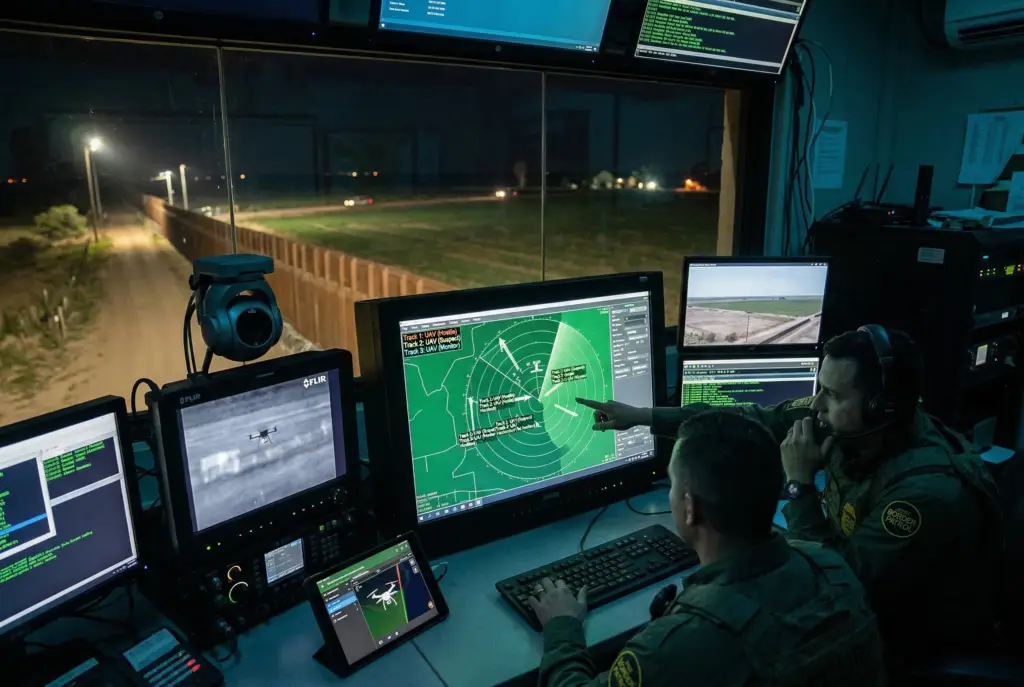
Every drone that crosses undetected is a future stolen. A child who will never grow up. A mother who will never stop mourning. A nation that keeps losing silently, not in wars, but in living rooms.
Because every unseen threat in the sky leaves a scar on the ground.
Conclusion
When crime operates at machine speed, defence can no longer depend on human vigilance alone. Consequently, the drone-enabled drug trade has transformed the skies into corridors of loss, stealing lives long before adulthood begins. Therefore, securing borders today means securing airspace with intelligence, autonomy, and persistence. This is precisely why systems like Indrajaal are built for this challenge—intercepting threats before they reach the ground. Ultimately, every drone stopped is not just a security success, but a future protected.